

The Arc'teryx Crisis: Assessing the fallout for Anta and the outdoor industry
Insights from BigOne's latest data on public sentiment and offline sales

In the immediate aftermath of the Arc’teryx fireworks incident, we published an article setting the context for the brand’s position in China. It explored how Arc’teryx had expanded beyond its core base of outdoor professionals to capture a broader, more diverse audience, and examined the rising consumer emphasis on brand values.
Building on that foundation, today’s article takes a deeper, data-driven approach. By leveraging BigOne Lab’s exclusive data on public sentiment and Arc’teryx’s latest offline sales figures, we provide a tangible assessment of the incident’s impact—not only on Arc’teryx itself but also on its parent company, Anta, and their peers within the outdoor industry.
A recap of the entire sequence of events
The high-end outdoor brand ARC’TERYX collaborated with renowned gunpowder artist Cai Guo-Qiang to stage a firework art performance titled “Ascending Dragon” on the high-altitude ridge of the Himalayas in Tibet on the evening of September 19, 2025. The event immediately attracted widespread attention.
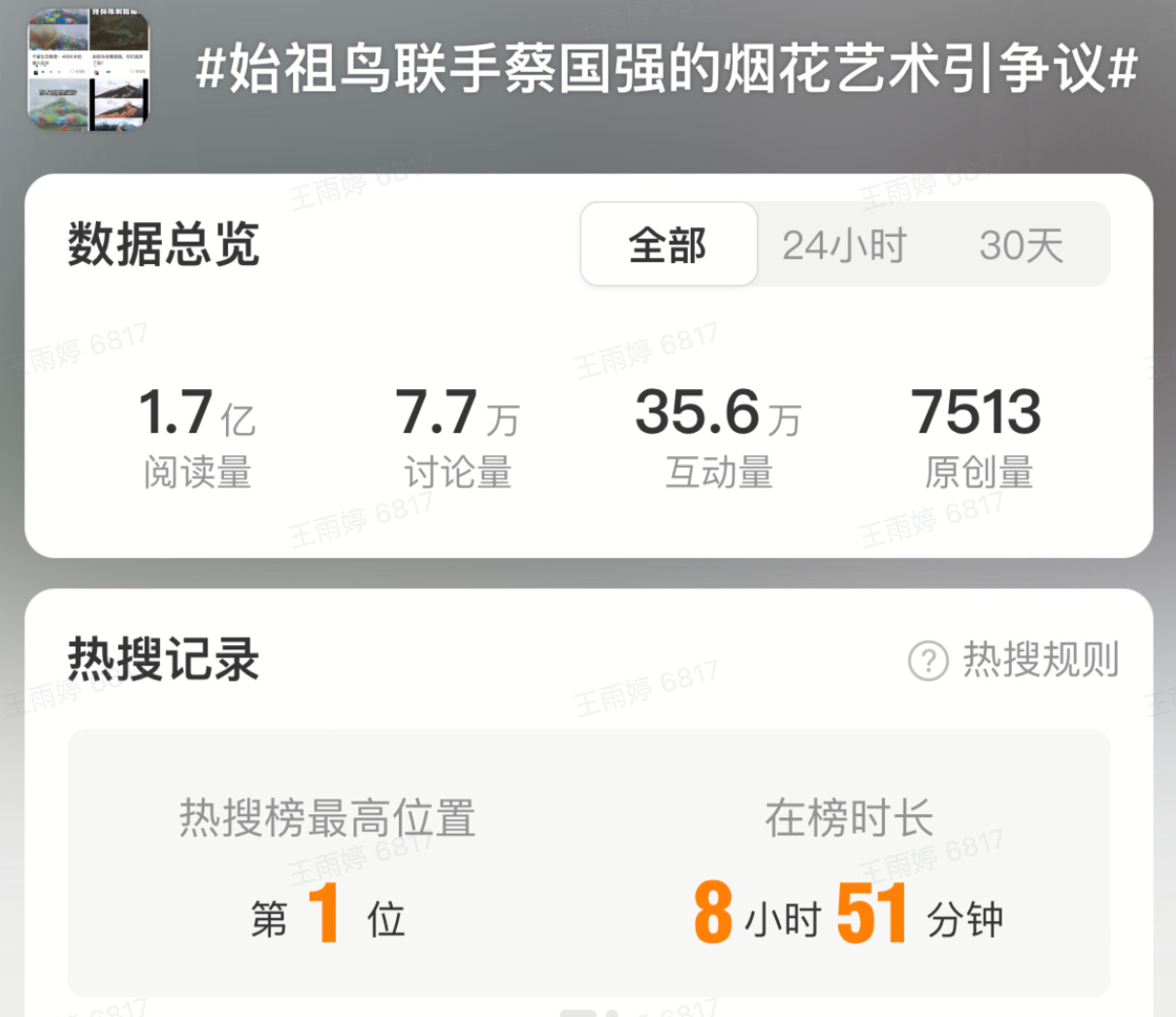
However, in less than a day after the video of the performance circulated on social media, public opinion rapidly shifted from praising the spectacle as “magnificent” and “artistic” to condemnation, using terms like “Blasting the Mountain” and “Ecological Destruction.” Related hashtags, such as “Arc’teryx and Cai Guo-Qiang’s Firework Art Draw Controversy,” quickly became a top trending topic on Weibo (accumulating over 170 million views as of the current date), thrusting Arc’teryx into the center of a massive public relations storm.
The core of the public outrage focused on three main issues: 1)Ecological Damage: Deep concern over the potential harm to the extremely fragile ecosystem of the Qinghai-Tibet Plateau. The public feared that even seemingly minor disturbances could inflict long-term, irreversible damage to local vegetation and wildlife. 2)Brand Value Betrayal: The action was seen as a severe betrayal of Arc’teryx’s long-standing core values, which emphasize “Respect for Nature” and “Leave No Trace (LNT).” This sparked a strong feeling of “betrayal” among loyal customers. 3) Governance Transparency: Public suspicion arose regarding the transparency of the event’s approval process and whether local government authorities had adequately prioritized ecological protection.
Following the public uproar, the crisis management strategies employed by Arc’teryx and Cai Guo-Qiang not only failed to contain the damage but actually escalated the negative storm due to a series of missteps, ultimately leading to a complete collapse of public trust.
Initially, both Arc’teryx and Cai Guo-Qiang chose silence, quickly removing all videos and promotional materials related to the “Ascending Dragon” project from multiple platforms. This attempt to “cover up” the incident was perceived by the public as disingenuous and short-sighted, further fueling calls for a boycott. This cold-shoulder approach failed to extinguish the flame; instead, it made the fire burn hotter.
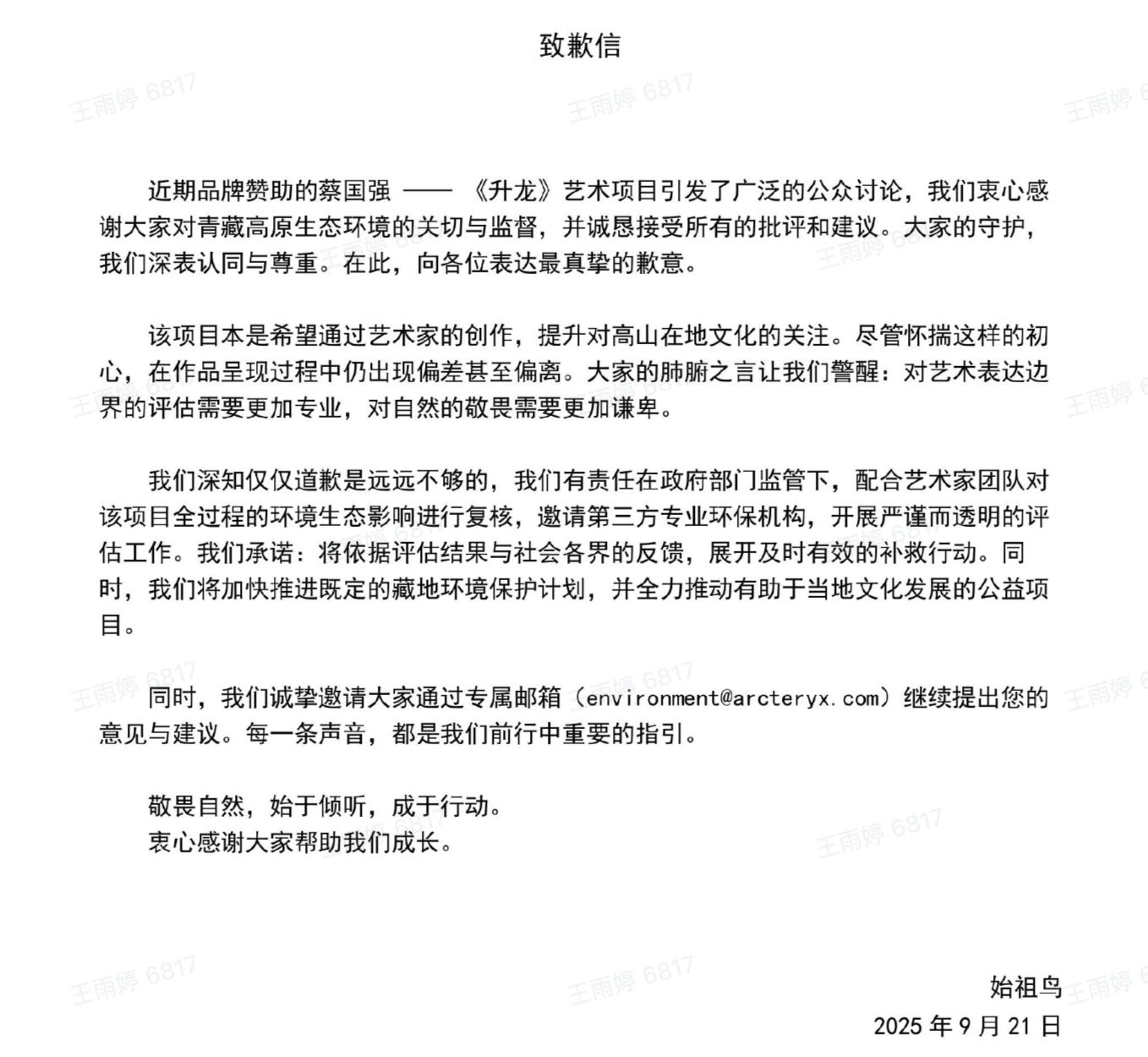
It was not until September 21st, two full days after the public sentiment peaked, that both parties finally released their respective apology statements. This delayed response is widely considered a failure to capitalize on the “golden 24 hours” of crisis communication, causing the brand to lose control of the narrative, which was entirely ceded to netizens, media outlets, and environmental advocacy groups.
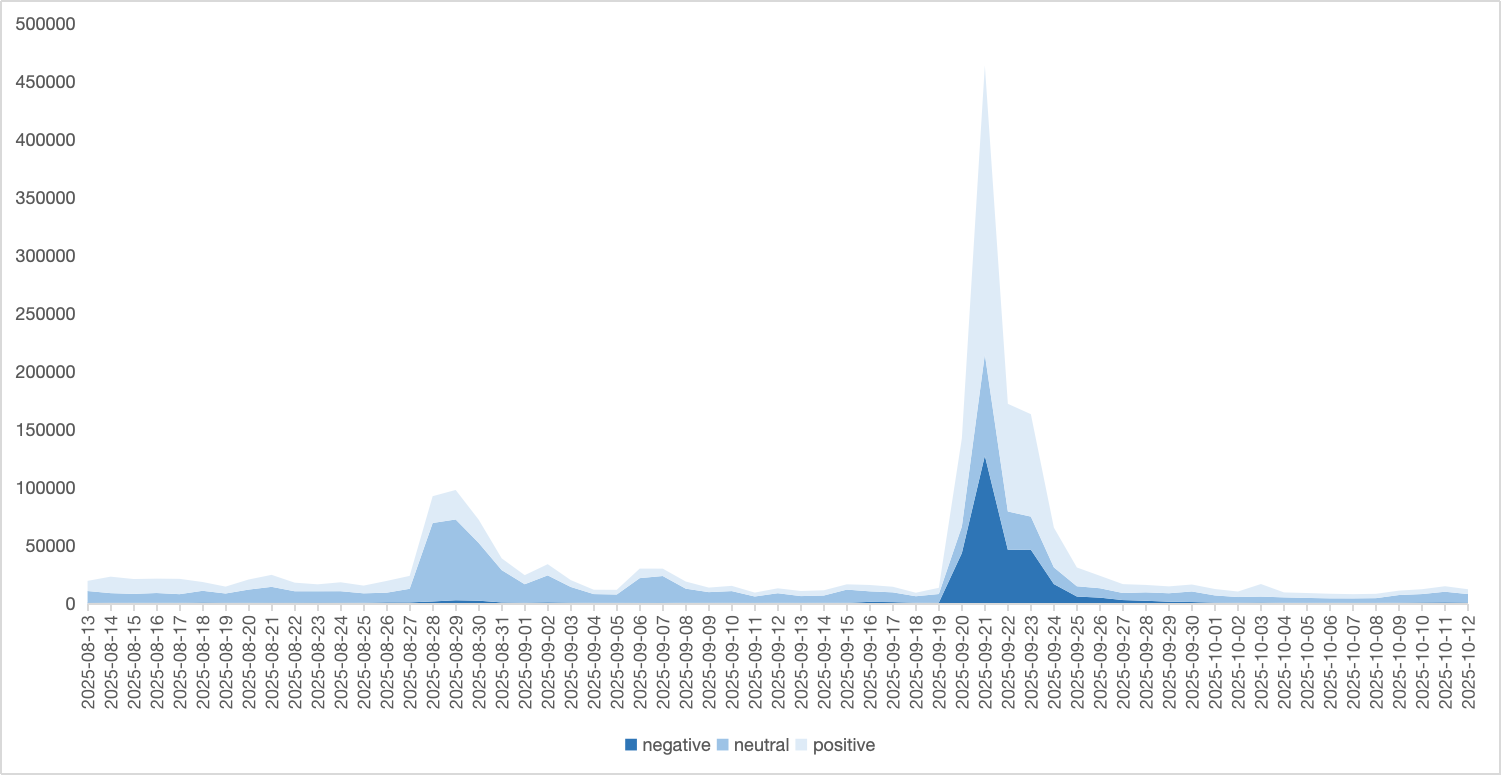
Changes in social sentiment before and after the firework incident
According to BigOne Lab’s exclusive sentiment Data, prior to September 19th, the topic’s social media activity remained low and stable, with daily engagement typically below 50,000. Discussions were generally positive, with virtually no negative sentiment.
The turning point occurred on September 19th with the release of the fireworks video, causing a sudden surge in discussion. Sentiment rapidly intensified on September 20th and peaked on September 21st (the day the apologies were issued), with total engagement approaching 450,000. Throughout this period, the spike in activity was primarily driven by negative sentiment. Although engagement began to recede after September 22nd, overall discussion volume remained higher than pre-incident levels. It was not until around September 28th that the discussion returned to its baseline, indicating the public outcry lasted for approximately 10 days.
The Impact on ANTA (2020.HK) and Arc’teryx
In the following content, we leverage exclusive data on social media sentiment and National Day holiday sales to provide a clear assessment of how the Arc’teryx fireworks incident is impacting its parent company, Anta, and the broader outdoor apparel industry. This content is only available for our paid subscribers.
