


Before today’s post — applications are still open for the 2026 Autumn Baiguan China Tour:
Robotics & AI Executive Tour in Beijing from Oct 19-23
Advanced manufacturing in Foshan and Shenzhen from Oct 26-30 (4.5 days)
You can check out the pricing and RSVP here:

Please contact us at Baiguan_ChinaTour@bigonelab.com with any questions.
Shortly after September 24, 2024, I wrote a piece called “The Leopard Changes Its Spots.” I was trying to understand why policy had changed, and what might follow. That piece is no longer available (maybe it’s a bit sensitive to discuss the motives behind such a watershed policy change), but the questions are still worth returning to. We now have nearly two years of data to look at.
Some of the results are fairly clear. Stocks have risen substantially. Local governments pay lower interest rates and have longer to repay their bonds. That has eased the immediate pressure on their finances, even though the amount they owe has increased.
Other results are less encouraging. Households are borrowing less, private investment is falling and spending remains weak. Exports and technology businesses are doing much better. So the question is no longer just whether the economy has improved. It is who has seen an improvement, and why others have seen very little.
Data through August 2026 unless noted.
The first thing to change was the market.
The stock market is a useful place to start, because the change there has been so visible.
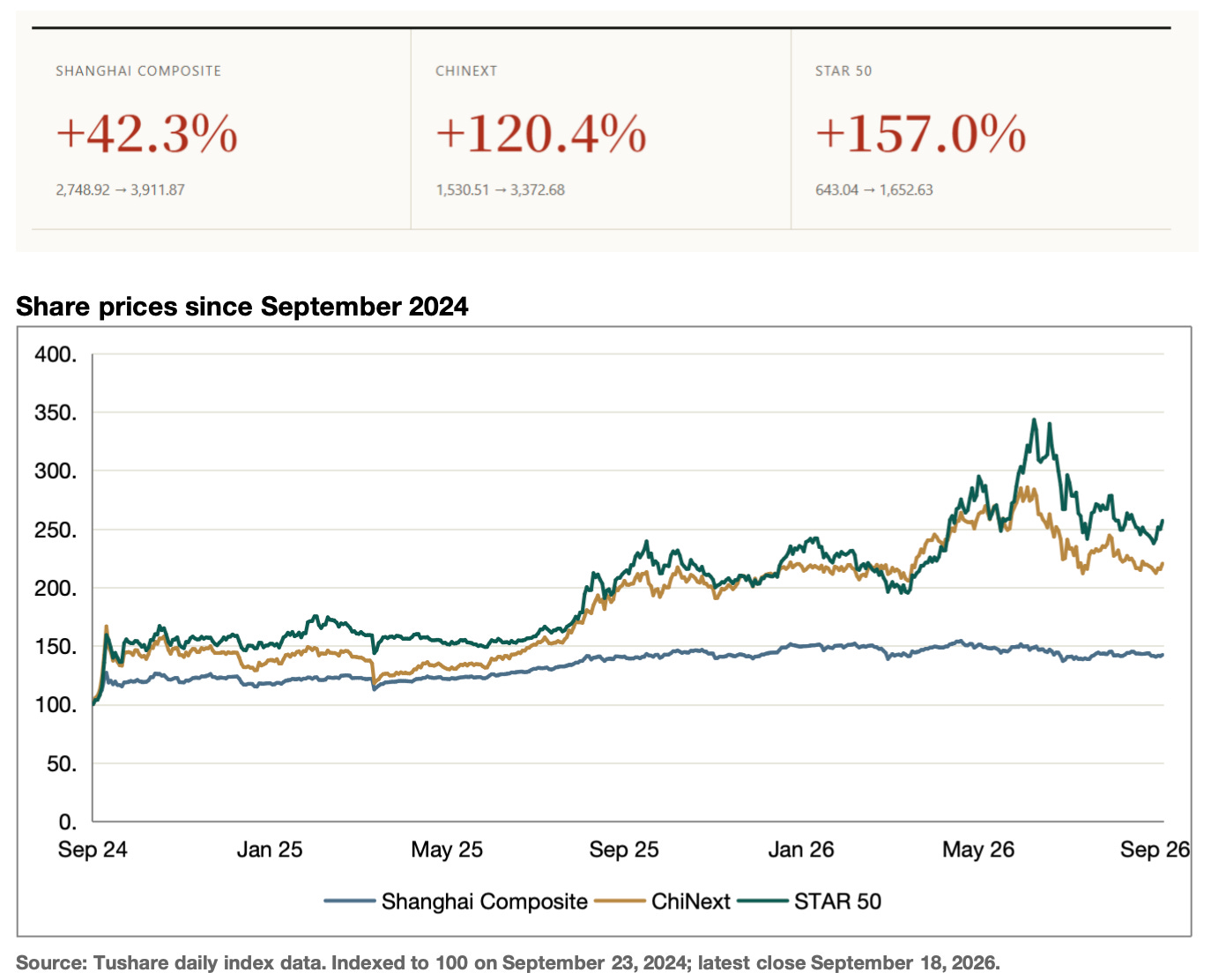
From the last close before the announcement to September 18, 2026, the Shanghai Composite rose 42.3%. The ChiNext Index more than doubled, and the STAR 50 gained 157%. By this measure, the effort to restore confidence in the market has worked.
The differences between those returns tell us something too. The indices with more technology companies rose much further. Anyone who owned those stocks has good reason to feel that the past two years have gone well. But most people judge the economy by their pay, their job prospects and the value of their home. A rise in technology shares does not necessarily change any of those things.
Some parts of the economy have done much better than others.
The same difference appears in the economic data. Exports, electronics and high-tech manufacturing are growing faster than they were in 2024. Retail sales are growing more slowly, while investment and property development have weakened. Some of the growth rates in these two groups are now more than 20 percentage points apart.
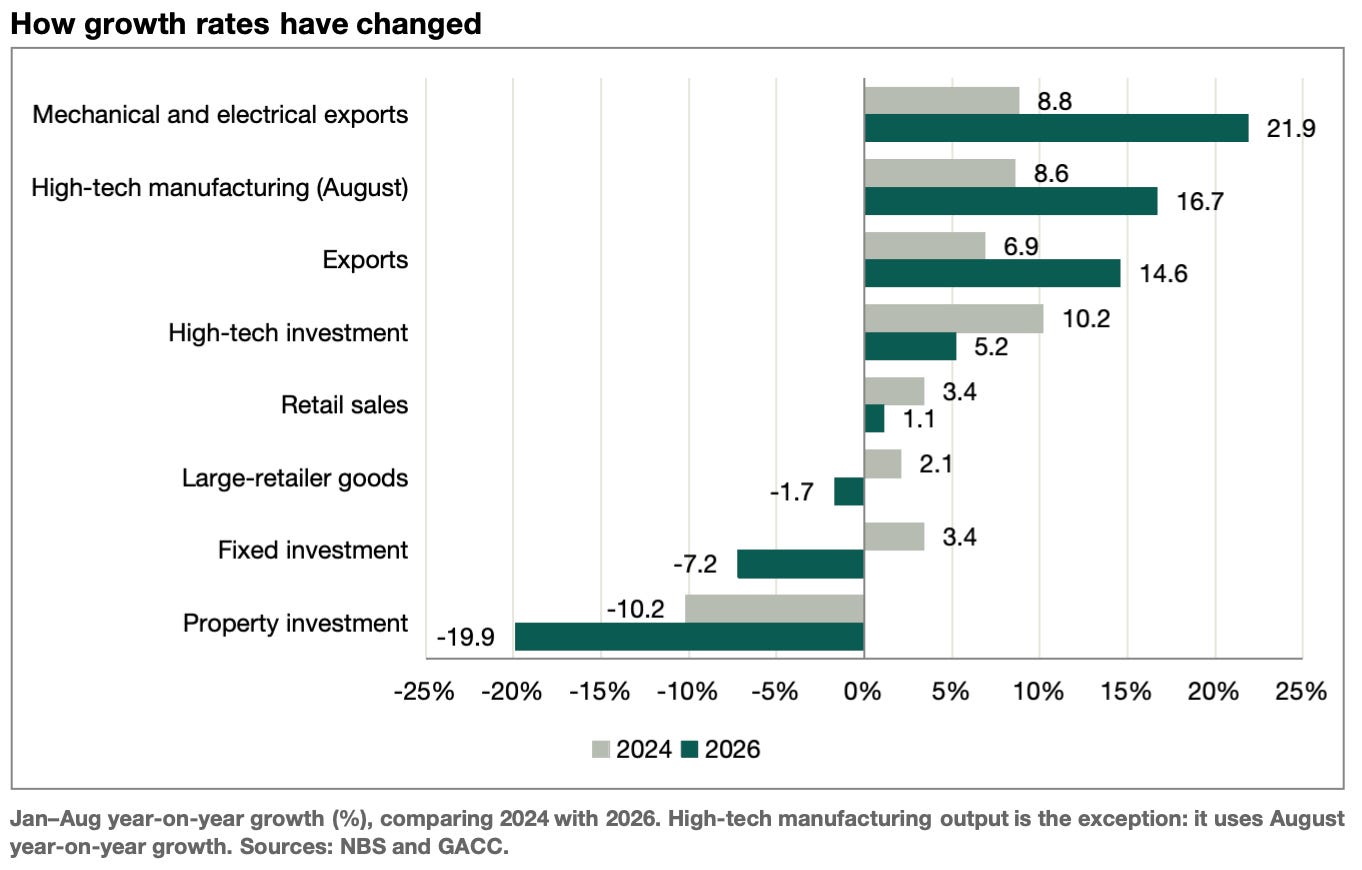
China has a large and growing role in AI, and many of its manufacturers are doing well overseas. These businesses account for much of the encouraging news in company earnings. At home, however, shops, property developers and many smaller businesses face weaker demand. Their customers are the same households that remain careful about spending.
There is no reason to dismiss the progress in exports and technology. The difficulty is that it has not yet led to a similar improvement in incomes and spending across the country. This is why reports of strong growth in particular industries can seem so far removed from everyday experience.
To see where the recovery has been slower, it helps to look first at what households are buying, and then at whether businesses are willing to invest.
Household spending is still growing slowly.
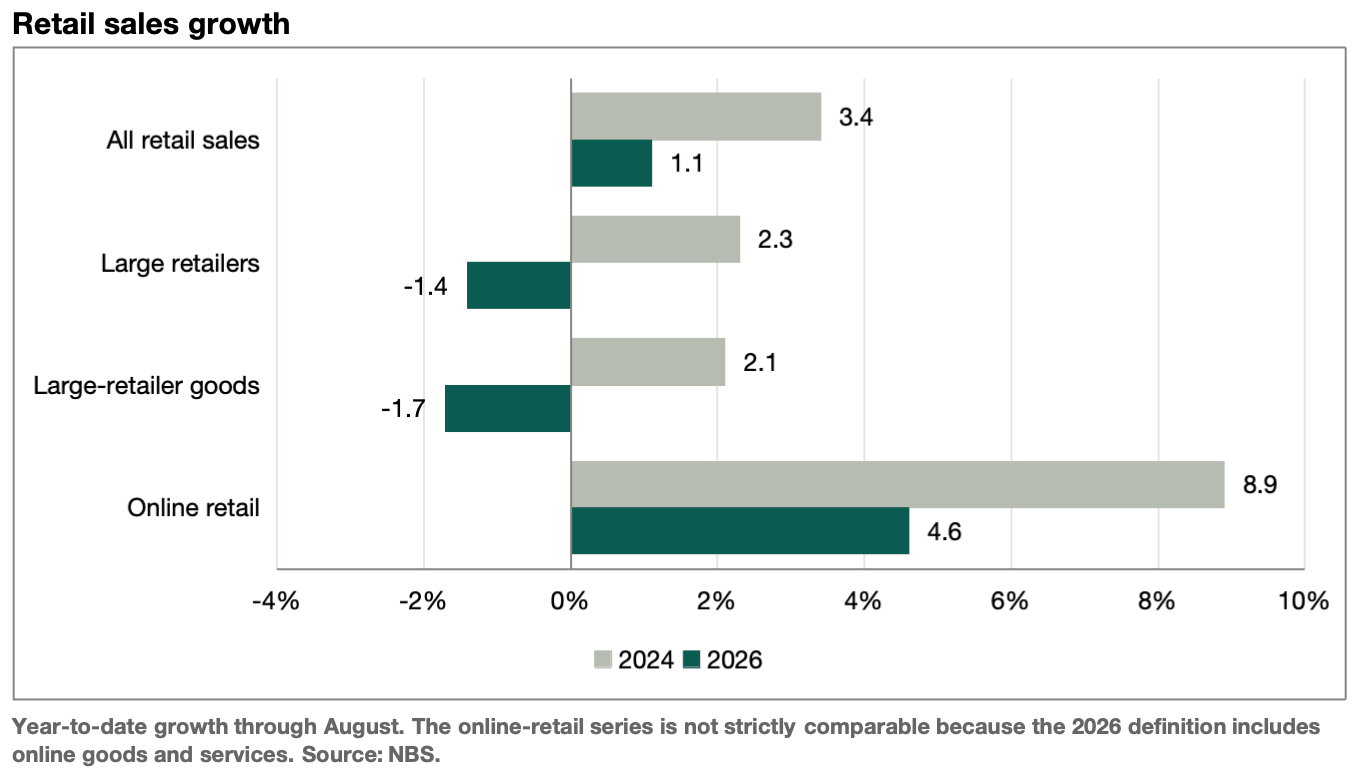
In the first eight months of 2024, retail sales grew 3.4%. In the same period of 2026, they grew just 1.1%. Sales at large retailers fell. Online retail was still growing, but at a lower pace.
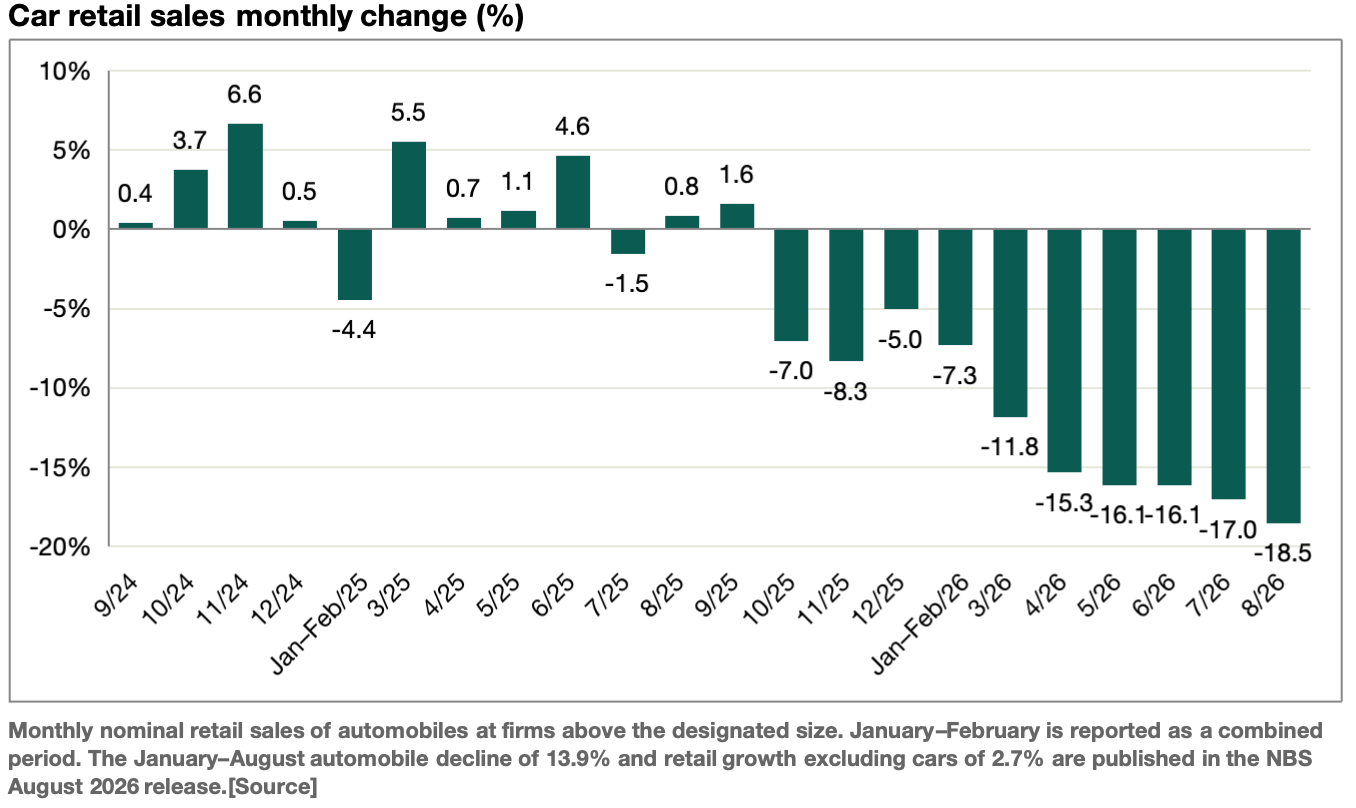
Car sales explain a good deal of the weakness. After trade-in subsidies were expanded, car retail sales rose 6.6% in November 2024. The improvement did not last. Some buyers may have brought their purchases forward to use the subsidies. By November 2025, sales were falling by more than 7% from a year earlier. In August 2026, the decline reached 18.5%.
The unemployment figures need a closer look.
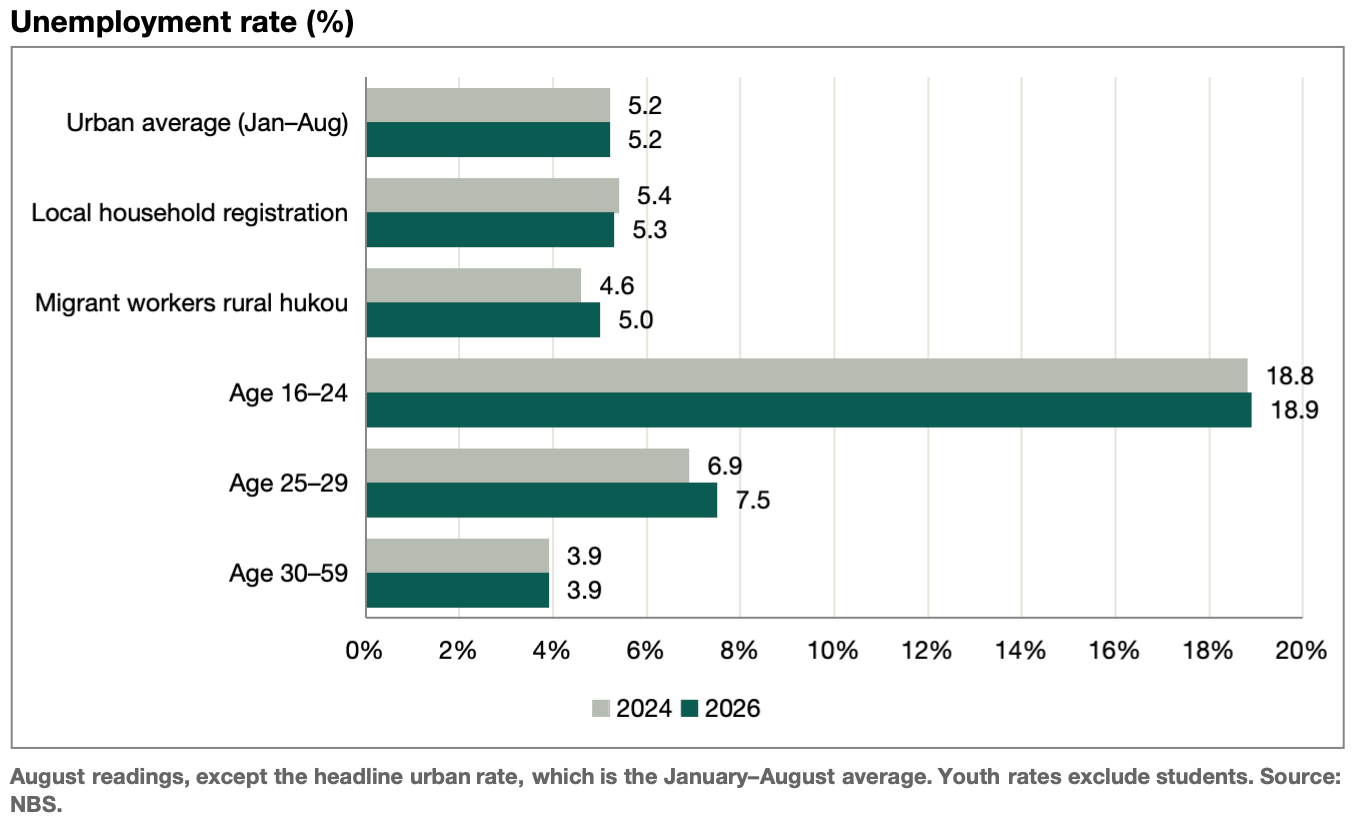
People are more likely to spend when they feel secure in their jobs. The overall unemployment figures offer some reassurance: the surveyed urban rate averaged 5.2% in the first eight months of 2026, unchanged from the same period of 2024. But that average covers people in quite different circumstances.
Among migrant workers with rural household registration, unemployment rose from 4.6% to 5.0%. Among 25–29-year-olds, it rose from 6.9% to 7.5%. The weakness in property and construction may help explain the first increase. The second suggests that people in the early years of their careers are also having a harder time finding work.
The unemployment rate also tells us little about the quality of the work people find. China has more than 200 million people in flexible employment. An earlier official survey estimated that roughly 84 million worked in newer forms of employment, often through online platforms (the gig economy).
For some people, flexible work is a welcome choice. For others, it is what they can find after losing a more secure job. They still count as employed, but they may earn less, have fewer benefits or find fewer opportunities to learn skills that will help them later. A stable unemployment rate can miss these changes.
