“Are there any real bright spots in the economy? Apart from AI?”
Some version of this question comes up in almost every conversation I have with knowledge workers in China’s major cities.
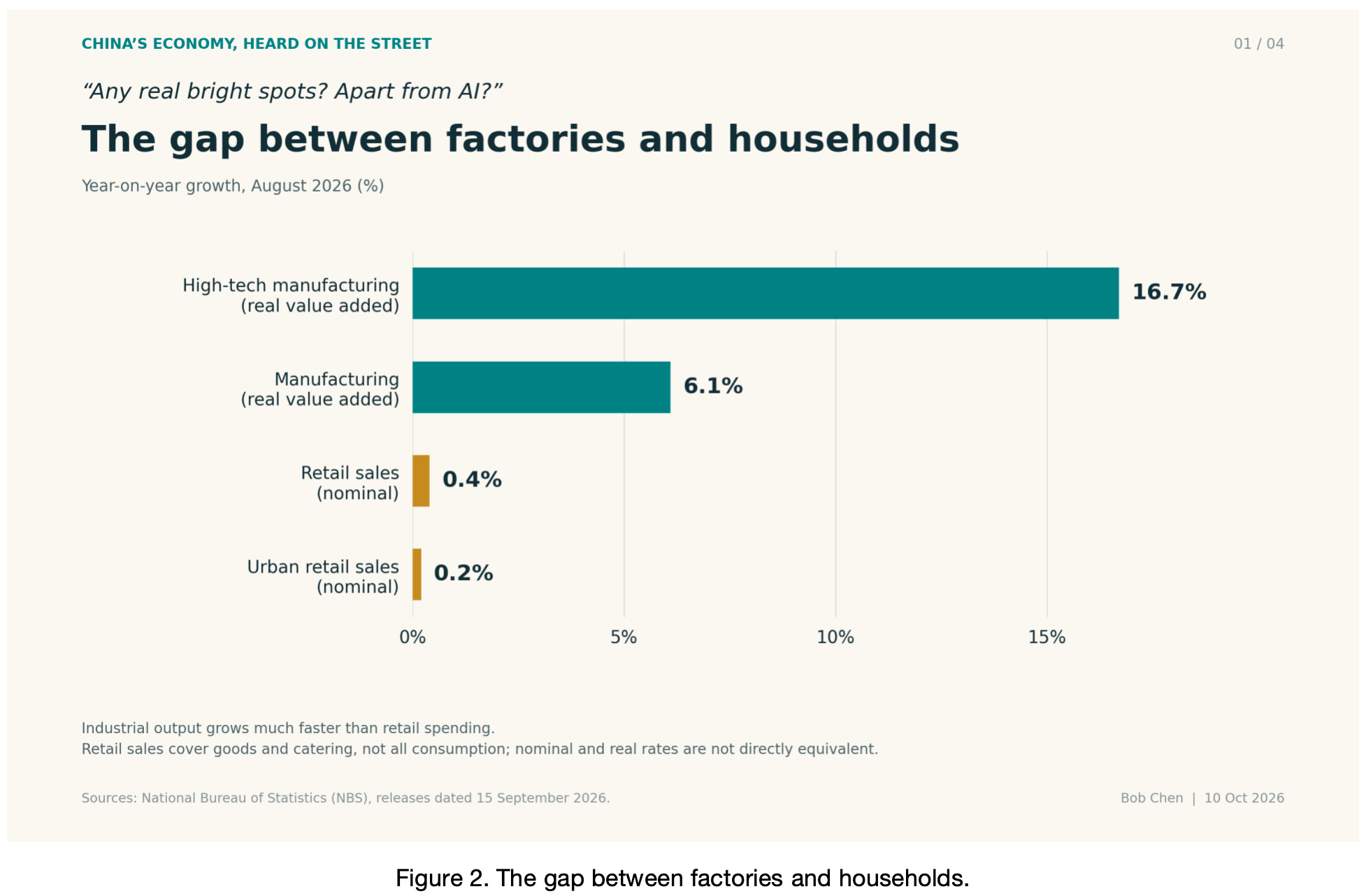
The main concern is weak domestic demand. AI may be the economy’s brightest spot, but for most ordinary people, its explosive growth has brought few tangible benefits and little direct change to their lives. (Even so, attitudes toward AI remain broadly open, with relatively little resistance.)
I think another factor shaping people’s mood is the stock market. It still has a considerable influence on sentiment among urban professionals. In June, when I was speaking with people in Shanghai, the mood was generally upbeat. After the market pulled back in July, however, recent conversations have turned more pessimistic—not just about stocks, but about the outlook for the Chinese economy as a whole.
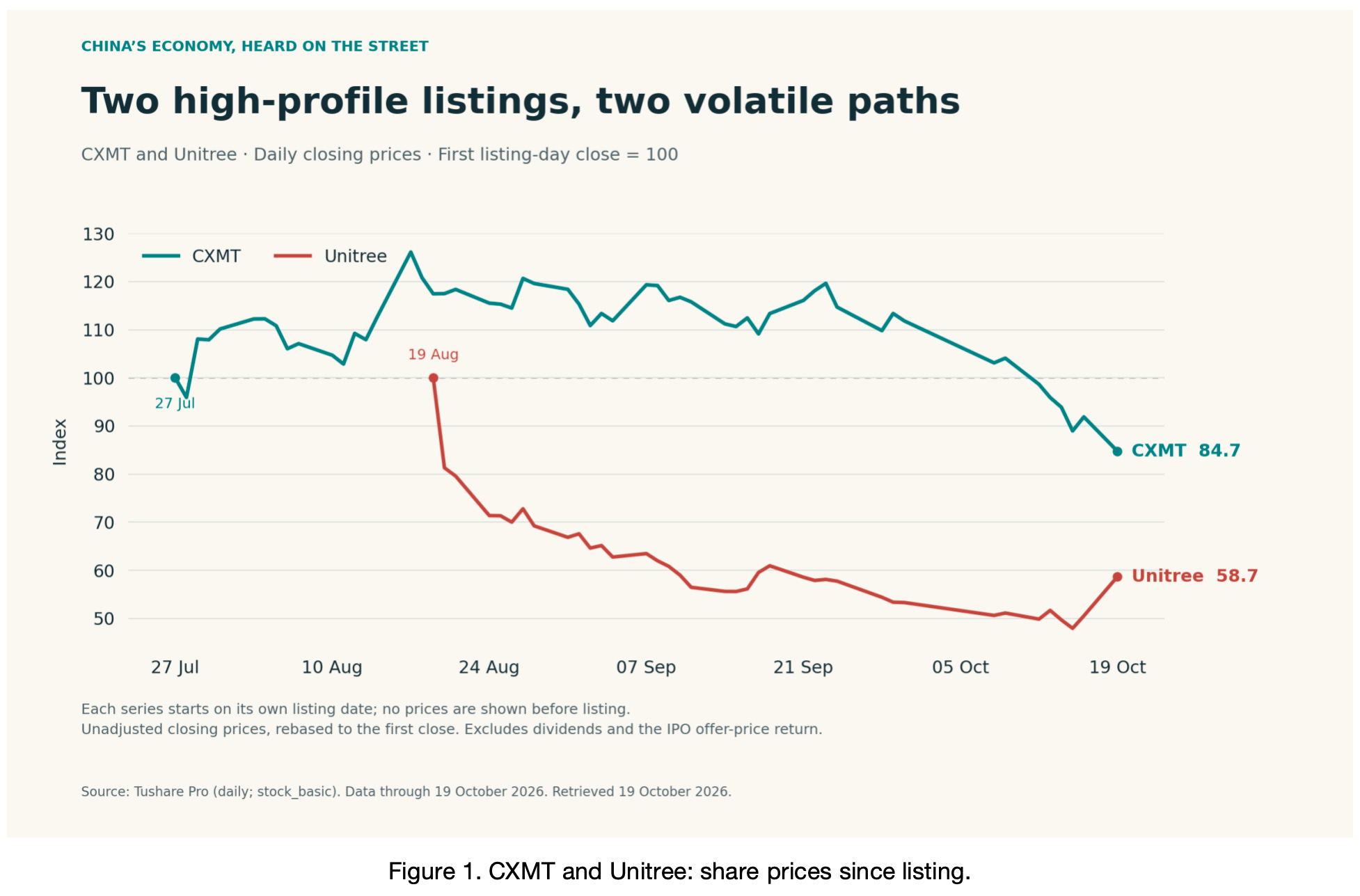
China’s stock market is heavily driven by rotating investment themes, with one story capturing speculative attention for a stretch before giving way to the next. Since last year, two prominent themes have already gone from speculative frenzy to fading enthusiasm: robotics, particularly humanoid robots, and the commercial space sector. The broader technology sector has also faced substantial selling pressure. Many people I speak to attribute this to speculative money driving prices up before quickly exiting.
The share-price performance of two Chinese companies that listed this year—both well known internationally—may offer an illustration: memory-chip maker CXMT and robotics company Unitree.