Several weeks ago, while browsing our company’s online sales data for Chinese consumer brands, I noticed an emerging trend in a surprising category: the low-sugar rice cooker. It immediately caught my attention. Rice cookers are perhaps the most fundamental small home appliance in the majority of Chinese households; it is difficult to imagine significant innovation for an appliance that performs such a simple, mundane function.
If you wonder how “low-sugar” rice is made, it uses a specific “boil-drain-steam” process. This program filters out a portion of the rice’s amylopectin (the component easily converted into sugar) along with the starchy rice water. Using a smart low-sugar rice cooker reportedly reduces the sugar content and caloric value of the rice.
While I didn’t delve deep into the scientific legitimacy of this method, its popularity signals something important: an increasing number of Chinese households are adopting the “low-sugar” trend and becoming more aware of daily sugar intake.
The rise of “low-sugar” tastes
For a long time, sugary beverages remained popular in pop culture due to their soothing, stress-relieving effects, despite known health issues. Young Chinese consumers even coined a name for it: “Happy Fat-Boy Water“ (快乐肥宅水). Originally inspired by Japanese anime culture roughly a decade ago, the term refers to sugary carbonated drinks like Coke. In high-stress urban life, the happiness brought by a cup of Coke or sweetened milk tea has been considered a worthwhile indulgence, even at the expense of weight gain.
But the trend is changing.
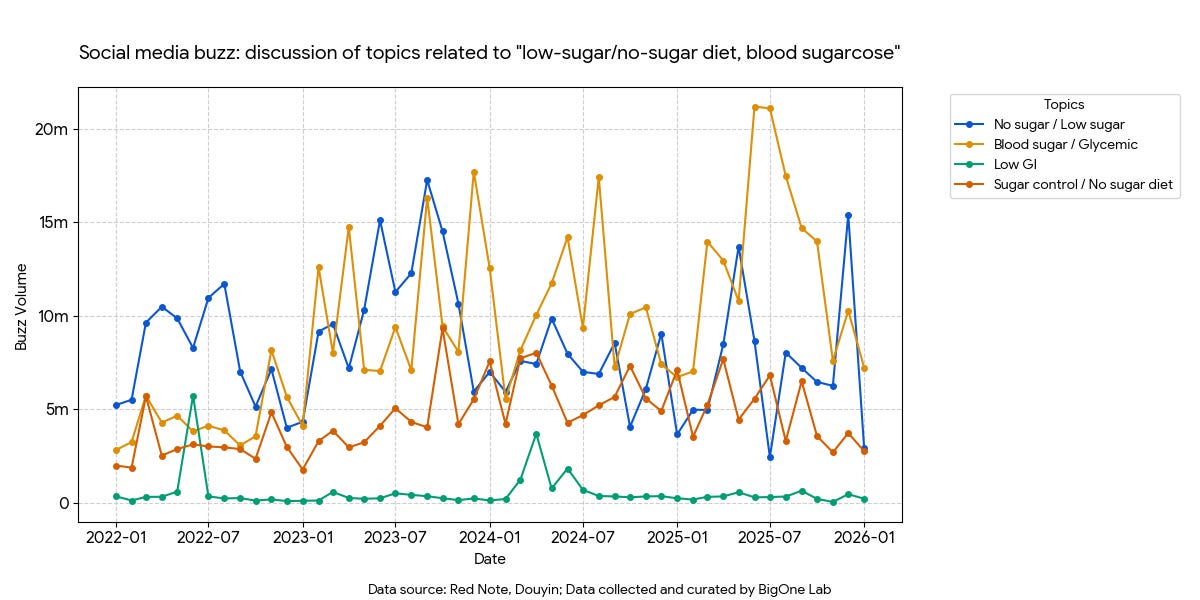
Since late 2022, social media discussions regarding “no-sugar” and “low-sugar” lifestyles have surged as people become more health-conscious following the COVID pandemic. Choosing sugar-free beverages, once a habit limited to niche health-conscious groups, is quietly becoming a mainstream—and even fashionable—trend.
Part of this shift is driven by necessity. By 2024, China had the world’s largest diabetic population, reaching 140 million adults and accounting for over 25% of global cases. Overweight rates in Chinese adults increased from 37.4% in 2000 to over 41% in 2014, while obesity rose from 8.6% to nearly 13% during the same period [*].
These statistics may seem unintuitive; if you live in China, you might not see many people who appear visibly overweight. However, rapid urbanization has led to reduced physical activity and sedentary lifestyles for urban Chinese, making these health issues less visible. There is a growing trend of younger-onset diabetes (ages 18–49), with abdominal obesity being the highest attributable risk factor. This risk is increasing fastest among young people in industrialized regions living in high-stress, yet sedentary work environments.
Another factor is a historical lack of awareness. Even today, many people aren’t aware of the exact sugar content in their diets. For instance, many believe that fruit juice is a healthy beverage as long as it is natural and has no “added sugar,” despite being high in fructose.
More subtly, a typical Chinese meal is already highly concentrated with “refined carbohydrates,” which account for 50%–60% of total energy intake (sometimes higher). Many people simply consume more sugar than they intend without realizing it.
This, too, is changing. Since 2023, rising numbers of young Chinese have discussed “low-sugar” diets and “sugar control/abstinence” (控糖/戒糖) on social media. The trend first gained traction among fitness enthusiasts—a small cohort paying close attention to how food affects blood glucose—and quickly spread to the general public.
This awareness extends beyond added sugar to carbohydrates and broader sugar categories, fueling bestsellers like the low-sugar rice cookers mentioned earlier.
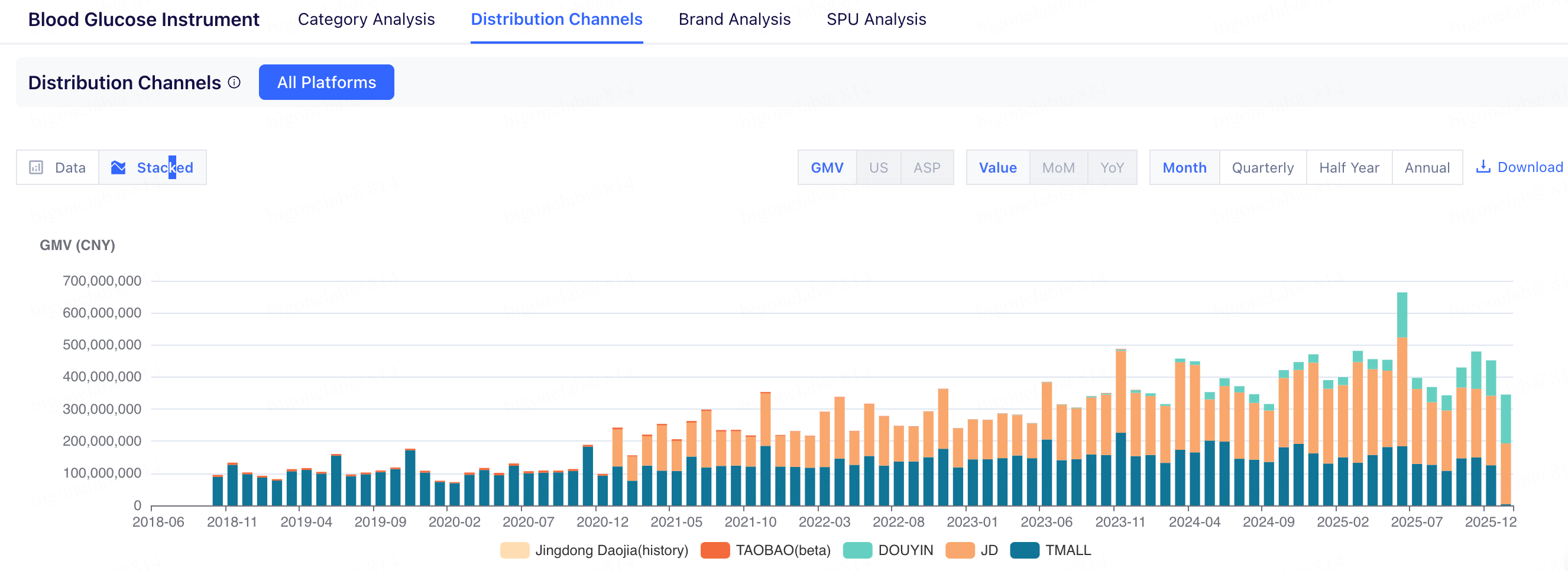
Blood glucose monitoring instruments have also become one of the best-selling medical devices on Chinese e-commerce platforms over the last few years. It is no longer uncommon to see urban Chinese wearing continuous glucose monitors, even if they do not have obvious health issues like obesity or diabetes. People are beginning to understand how blood glucose relates to chronic issues such as migraines, acne, and menstrual cycles, rather than focusing solely on weight loss.
The trend gave rise to increasing awareness of sugar intake, not just added sugar, but carbs and broader sugar categories in general, giving rise to new bestsellers like “low-sugar rice cookers” that I mentioned at the beginning of the article.
Blood glucose monitoring instruments became one of the best-selling medical devices in the past few years across online e-commerce platforms in China.
Online sales of blood glucose monitoring instruments: Tmall, JD, Douyin, etc. Data collected and curated by BigOne Lab
It has also become not uncommon to see urban Chinese in my city wear blood glucose devices, even if they do not have obvious health issues such as obesity or diabetes. People are starting to gain more understanding of how sugar intake and blood glucose are related to other chronic issues, such as migraines, skin acnes, menstrual cycles, and other areas of health, instead of focusing solely on weight loss.
Implications for investors
Several days ago, the Financial Times reported that China is considering an additional tax on sugary beverages to curb health problems like obesity and diabetes. Although there has been no official confirmation, some publicly listed beverage companies faced a sell-off following the news.
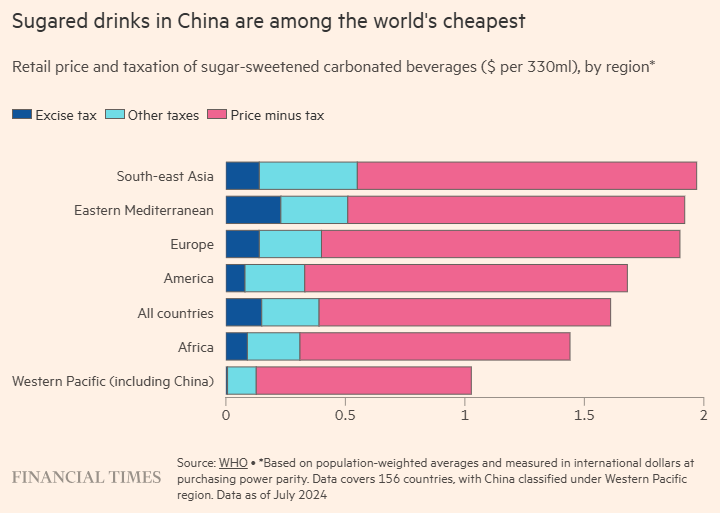
China currently produces some of the cheapest sugary beverages in the world; while over 116 countries have implemented sugar taxes, China does not currently have one in place.
Regardless of the timeline for a rumored “sugar tax,” the “low-sugar” and “no-sugar” trends are here to stay. I believe the primary takeaway is that sugar-free or low-sugar beverages will become a growing necessity for Chinese consumers.
On one hand, awareness of sugar intake is only just beginning to scale. On the other hand, the variety and volume of sugar-free options are not yet saturated. For example, in a Japanese convenience store, it is actually difficult to find a bottled beverage that isn’t sugar-free. But in China, the majority of soft drinks still contain sugar, with only a few options clearly labeled “sugar-free” or “0 cane sugar.”
Chinese households are generally very health-conscious. My empirical observation is that a high percentage of people are willing to sacrifice the “happiness” of sugar for the sake of health, across affluent, middle-class, and low-income groups. Even without tax enforcement, I believe Chinese households will embrace low-sugar drinks with minimal education.
For instance:
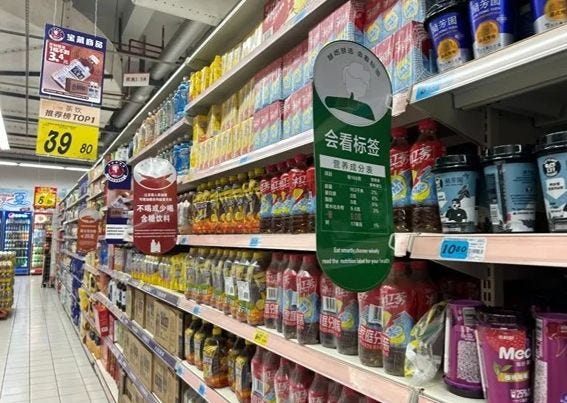
Since 2023, Shanghai has piloted “traffic light” health warnings and “Nutri-Grade” labels for sugary drinks, covering over 20,000 stores.
Fudan University research shows that since these policies were implemented, sugary drink sales have dropped significantly. A September 2025 survey of 10,000 residents showed that over 50% now choose sugar-free or low-sugar options.
Labeling system in a supermarket in Shanghai. Picture from: https://www.163.com/dy/article/KN354VJ10514HDQI.html
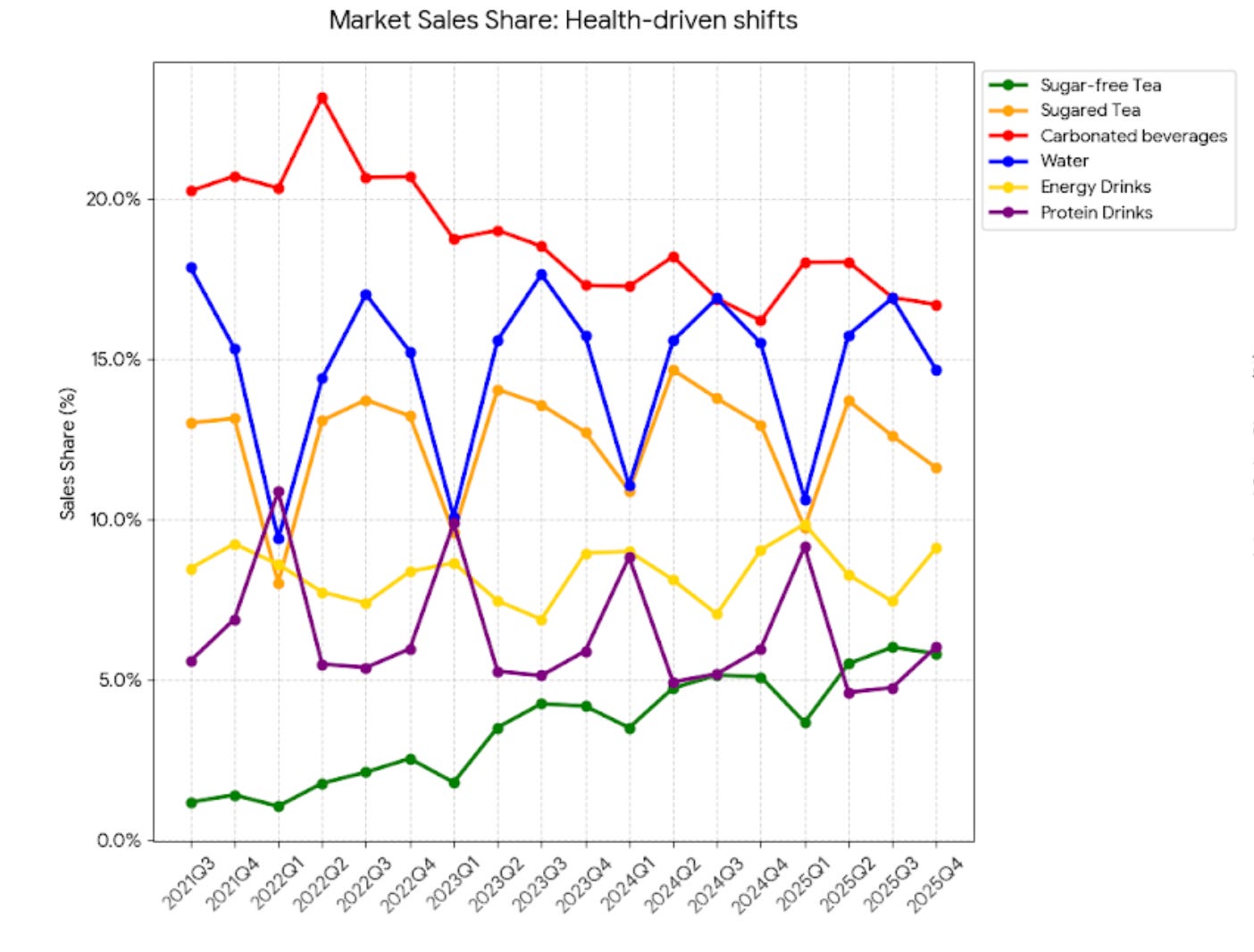
Our own offline payment data shows that “sugar-free” tea has experienced explosive growth among soft drinks since 2024. Functional drinks, such as electrolyte water and energy drinks popular with fitness enthusiasts, follow closely behind. China’s soft drink market is revealing a significant structural shift toward health-conscious categories.
Sugar-free tea has seen its market share grow from approximately 1.1% in 2021 to nearly 5% by late 2025. Conversely, carbonated beverages have seen a continual drop in market share since 2022.
Specifically, Nongfu Spring (HKG: 9633) is successfully transitioning from its historical identity as a “bottled water company” into a diversified beverage giant.
Continue reading this post for free, courtesy of Baiguan.