


When we examine China’s consumer market, youth cohorts and the silver economy command the spotlight, while the “post-80s” trapped in the middle are often dismissed by marketers as a generation weighed down by aging parents, young children, and mortgages. Yet they are precisely the ones touching the broadest and most authentic household spending scenarios in China.
Last week, we shared Part I of Cyanhill Capital’s 2026 annual report, The Post-80s: From Carrying the Load to Reallocating the Money.

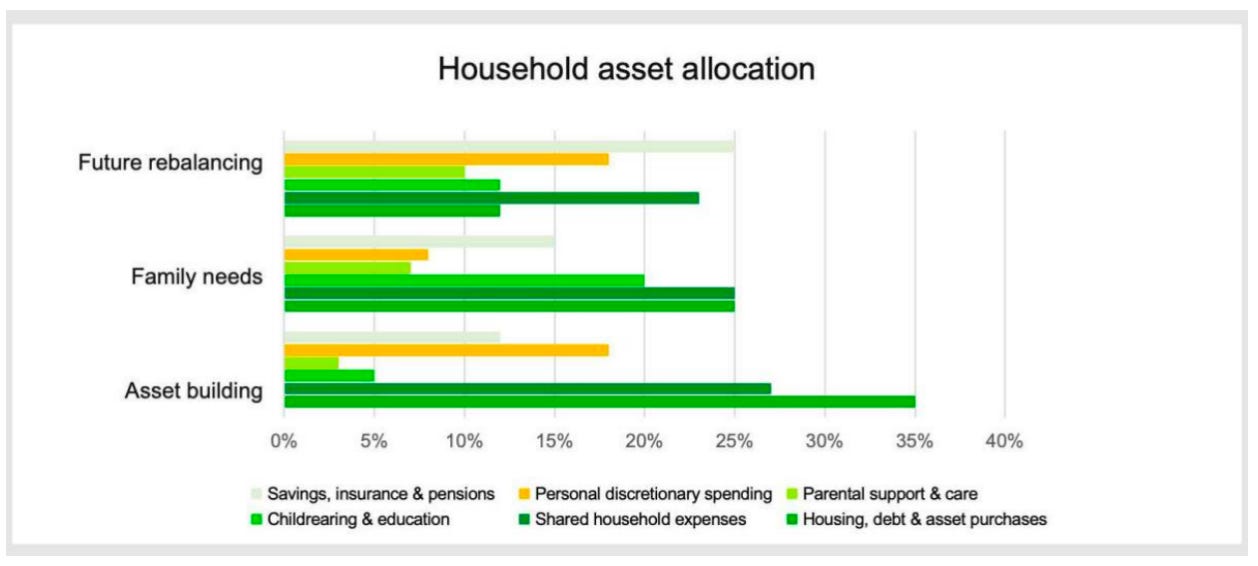
And today, we continue with Part II. Part II details how the “post-80s” generation’s household cash flow evolves across three distinct stages (asset-building, household operation, and future reallocation), how their spending priorities tier under budget constraints while protecting family and time within China’s market, and what the future holds as they navigate both the accelerating AI era and China’s longevity society.
At Baiguan, we are always committed to bringing in experts from all fields to offer on-the-ground insights into China’s shifting landscape. We think Cyanhill is among the best early-stage investment firms in China and believe their perspective provides invaluable clarity on how consumer behavior is evolving across key demographic cohorts.
About Cyanhill Capital: Cyanhill Capital is an early-stage investment firm focusing on the consumer sector, with strong ties to China’s market and innovation ecosystem. As a homegrown venture capital firm, our success stems from autonomous thinking and deductive reasoning—applying deep industry frameworks and targeted insights to identify exceptional opportunities.
At Cyanhill we employ aesthetic systems as our foundational methodology—evaluating founders’ ability to shape brands, define industry positioning, and design business rules as predictors of long-term value. We believe exceptional companies differentiate themselves through aesthetic decision-making in business creation.
If you have a business plan or other inquiries, you can reach out to: bp@cyanhillcapital.com
The Post-80s’ Consumption Shift
Based on age-group tabulations of the resident population in the China Population Census Yearbook 2020, the post-70s population was slightly larger than the post-80s at the time of the 2020 census. But populations decline naturally over the life cycle. The post-70s are older, so deaths in that group will keep rising over the next decade, while the post-80s are in their prime working years, with low mortality. Demographic projections suggest that around 2030 the surviving post-80s population will overtake the post-70s, making them the largest generation in China by population.
Academic research based on CFPS data finds that Chinese household consumption peaks twice over the life cycle, around ages 30–34 and 45–49. Household spending does shift structurally with family formation and the responsibilities of midlife. Although the post-80s are constrained by mortgages, childcare, and elder support, and have little room for discretionary spending, their total household spending and their ability to drive demand across categories remain prominent. More importantly, they are at a turning point in their spending structure. Over the past two decades, their money went mainly to housing and building a family. Today it goes mostly to keeping the household running. Over the next decade, as some mortgages near their end and children gradually come of age, their budgets will shift toward their own health, retirement reserves, quality services, cultural travel, and personal interests.
The core of the post-80s’ consumption shift is that control over household cash flow was first given up by individuals to assets, then to the family, and only later gradually returns to themselves. The post-80s were the main bearers of the last round of consumption expansion and are the key variable in the next round of wealth reallocation. Understanding the post-80s’ household ledger is, in effect, understanding the axis of China’s consumption-structure change over the next decade.
Following the post-80s’ life-cycle spending changes, we divide them broadly into three stages: the asset-building stage, the household-operation stage, and the future-reallocation stage.
Stage One: Asset-Building Consumption
The post-80s’ first consumption stage runs from entering the workforce through marriage, buying a home and a car, and setting up a basic household. For the older post-80s, it fell mainly in 2005–2015. For the younger ones, it may have run to around 2015–2021. This is not consumption in the ordinary sense, but a household being built from scratch in a concentrated burst. The home is the core asset, and renovation, furniture, appliances, and a car follow from it in turn.