


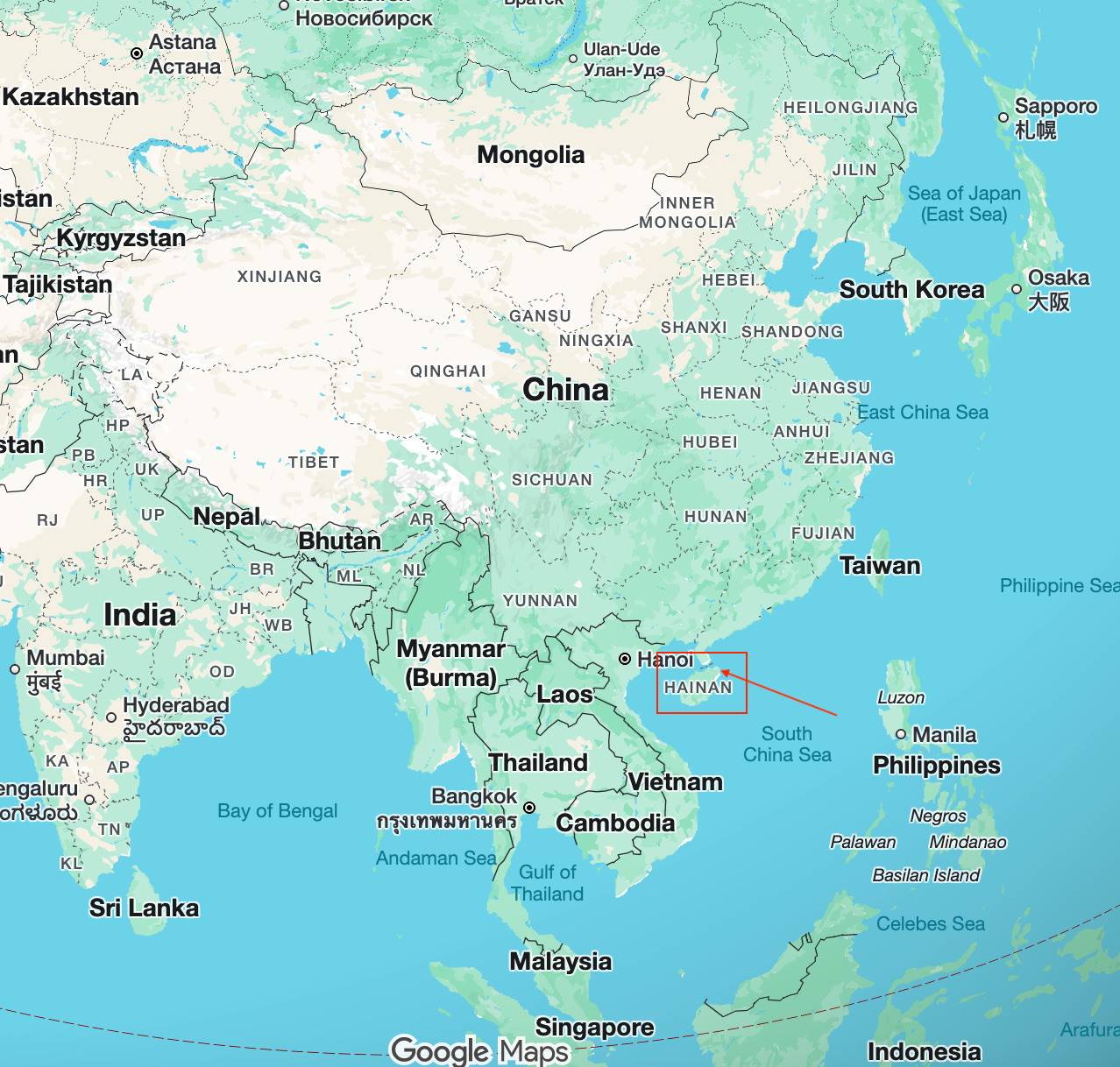
On December 18, 2025, China officially triggered one of its most ambitious economic experiments in decades: the full-island customs closure of Hainan [*].
Hainan is China’s southernmost province, an island roughly the size of Taiwan. For decades, it has been best known domestically as a tropical vacation destination — a place of beaches, resorts, and winter getaways for Chinese families escaping the cold north.
To the casual observer, Hainan is often described as “China’s Hawaii.”
But for global investors and policymakers, December 18 marked something far more consequential. It was the moment Hainan formally transitioned from a leisure-oriented island economy into what Chinese policymakers call a “within the border but outside the customs” special economic zone — the operational launch of the Hainan Free Trade Port (FTP).
How Does “Customs Closure” Work?
The term “customs closure” — or 封关运作 in Chinese — is easy to misunderstand.
“Closure” sounds restrictive, even isolationist. In reality, it represents the opposite. It is a deliberate step in China’s opening-up strategy, designed to expand zero-tariff access and ease cross-border trade — but within a carefully controlled geographic boundary.
Under the new system:
Hainan and overseas markets effectively operate under zero-tariff treatment for eligible products
Hainan and the Chinese mainland are separated by customs controls
This framework is often summarized by a phrase Chinese policymakers use repeatedly:
“First line open, second line controlled.”
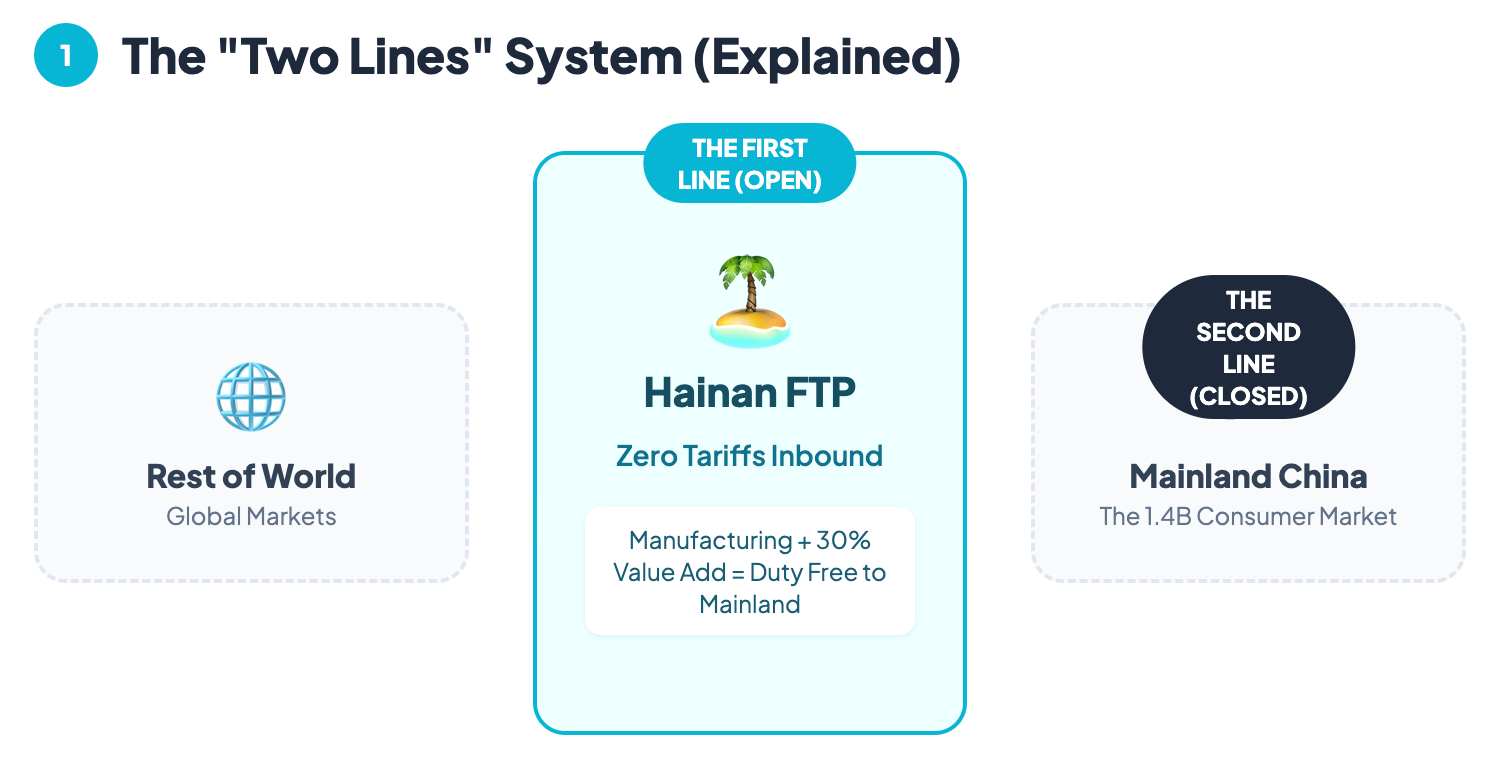
In other words, Hainan becomes more open to the world, while its economic interface with the mainland remains regulated.
A Long-Anticipated Move
This shift did not happen overnight.
As early as 1988, Hainan was established simultaneously as a province and a special economic zone — the fifth in China, following Shenzhen, Zhuhai, Shantou, and Xiamen. Yet unlike Shenzhen, Hainan never became an economic legend. For most of the past three decades, its economic scale remained modest.
In 2010, Beijing elevated Hainan’s development to a national strategy, branding it an International Tourism Island and launching pilot programs such as offshore duty-free shopping. These policies helped tourism and consumption, but they stopped short of transforming Hainan’s economic structure. In 2024, Hainan’s GDP only ranked 28th out of 31 provincial-level regions in China.
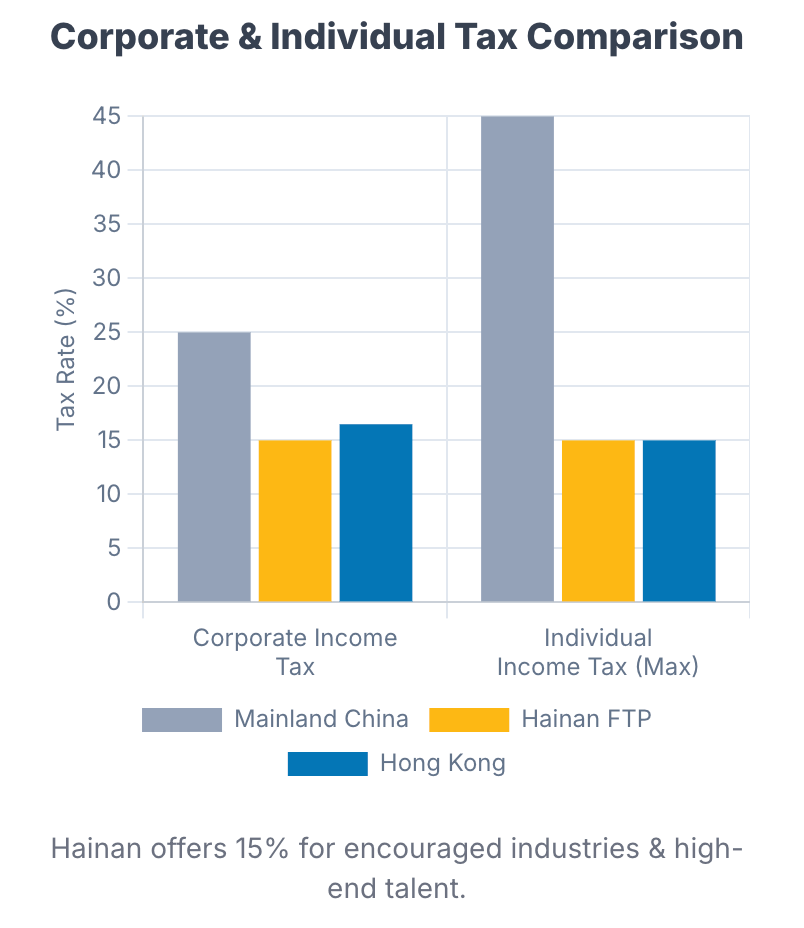
And this time, the scope of opening is far broader: Duty-free product categories expanded from roughly 1,900 to over 6,600; cross-border foreign exchange controls were further relaxed to facilitate trade, reducing approval requirements and administrative friction; corporate and personal income taxes were also lowered to attract businesses and high-end talent.
So Is China Building a New Hong Kong?
For foreign observers, this raises a natural question:
Is China trying to build a new Hong Kong — this time in Hainan?
After all, the similarities are hard to ignore.
Both are islands that sit at critical maritime crossroads. Both are designed as international trade hubs. And now, Hainan is introducing policies that sound very familiar: zero tariffs, simplified customs, looser capital controls, and preferential tax treatment for companies and talent.
So what’s really going on?
