


Last week, the 2026 World Robot Conference (WRC) concluded in Beijing. ICYMI, Amber published her own field notes about the event yesterday.
Today, we are delighted to invite someone who was deeply involved with the WRC as well as the broader China’s tech industry, Mr. GAO Erji, executive president of Caixin Media and managing director of Caixin Data, to pick his brain on his takeaways about WRC, his own views about AI and robotics in general, and what to expect in the upcoming AI & Robotics tour in Beijing that Caixin Data and Baiguan collaborate on in October.
Mr. Gao (Linkedin) also writes a personal newsletter at Gao’s Substack.
Q: Mr. Gao, please introduce a bit about yourself and Caixin Data.
A: I am Gao Erji. Before joining Caixin, I spent a decade as an investment banker and led the execution of more than 50 cross-border M&A transactions. For the past twelve years, I have been with Caixin, where my original mission was to upgrade our financial databases with AI. Through five strategic acquisitions, we built Caixin Data into what it is today. In 2017, Caixin founded its AI Lab to drive the technological infrastructure underpinning our intelligence services. I also serve as a strategic advisor to several institutions, and I have written some two hundred novels.
Caixin has been ranked ninth worldwide in the newly released 2026 Global Digital Subscription Report, with 1.2 million paid subscribers, confirming its position as the largest subscription-based news organization outside the U.S. and U.K. Our journalism is defined by depth, rigor, and professionalism. Beyond news, we host more than twenty high-end global forums each year, attended by heads of state, central bankers, and global business leaders. Caixin Data sits at the intersection of this editorial heritage and artificial intelligence, transforming decades of proprietary content and structured financial data into AI-ready assets.
That combination has become increasingly important with the rise of generative AI. General-purpose models can absorb enormous quantities of public information, but professional financial applications require a different layer of infrastructure: structured company and industry data, traceable sources, consistent taxonomies, and information whose provenance can be verified. In this sense, the development of financial AI is not simply a race to build larger models. It is also a race to connect those models to reliable professional knowledge.
Q: Would you want to share some takeaways about the WRC?
A: August 2026 has cemented Beijing as the global hub for robotics. Hot on the heels of the annual World Robot Conference, the 2nd World Humanoid Robot Games unfolded in quick succession. I attended both events in full. I have several takeaways to share.
First, both the conference and the Games have set new records in overall scale.
The expansion is visible in the numbers. The second World Humanoid Robot Games brought together 666 teams and 2,056 robots from 16 countries, compared with 280 teams and more than 500 robots at the inaugural event in 2025. Chinese participation alone included 641 teams and 1,975 robots representing 157 companies and 200 universities and research institutions.
Second, we are witnessing tangible leaps in robotic performance. Moves such as spinning back kicks have become standard capabilities for humanoid robots. Robots have comfortably shattered human world records in sprinting, high‑jump, long‑jump, and long‑distance running, while demonstrating competence in tennis, badminton, and other sports.
But athletic records are arguably less important than the increasing emphasis on practical tasks. This year’s competition expanded scenario-based events covering factories, hotels, homes and logistics, including assembly, housekeeping and emergency-response tasks. More than 40% of the tests require full autonomy. In other words, the benchmark is gradually shifting from whether a robot can perform an impressive movement to whether it can perceive, decide and complete useful tasks reliably without human intervention.
Third, World Action Models are gaining broader adoption across industries. This signals rapid, mutual iteration across algorithms, data architectures, generalization capabilities, robot hardware‑software stacks, and supply chains.
The significance is that robotics development is increasingly becoming a full-stack optimization problem. Improvements in models can generate better training data and control policies; better actuators and sensors make more complex behaviors possible; deployment then generates new real-world data that can be fed back into the models. The speed of progress therefore depends not on any single breakthrough but on how quickly these layers can iterate together.
Fourth, traditional industries are rapidly integrating into robotics value chains and flagship robotics events. Incumbent enterprises are rolling out robotic‑related use‑cases for exhibition. For instance, telecom operators have launched their own robotics offerings; automotive OEMs and component suppliers are releasing either complete humanoid robot units or robotic hardware components. For our part, Caixin brought our AI-powered financial tool suite to demonstrate at the event.
Lastly, participation by 16 nations in the Robot Games underscores China’s use of AI and robotics as instruments of international outreach. Indeed, AI and robotics are emerging as pivotal pillars for China’s global technological cooperation.

Q: Let’s wind back a bit. DeepSeek last year changed the international perception of Chinese AI almost overnight. But was DeepSeek really an exceptional breakthrough, or was it simply the moment outsiders finally noticed an ecosystem that had already become much stronger?
A: DeepSeek was not an overnight miracle but the inevitable result of years of foundational investment. Liang Wenfeng and his team at High-Flyer Quant had spent years building underlying algorithms and talent density long before the world took notice. The international sense of surprise simply reflects how little outsiders had been tracking China’s AI ecosystem. DeepSeek was the moment the world finally noticed a system that had already grown formidable.
This is not hindsight. Even if you just read us, for example, Caixin was tracking DeepSeek well before the global spotlight arrived. On August 31, 2022, Caixin published a report on DeepSeek titled DeepSeek’s Rise Sparks Arms Race Among Major AI Model Developers. In May 2024, we reported on the release of DeepSeek-V2 and its industry-shaking pricing strategy—dubbed the “Pinduoduo of AI”—which forced major tech firms into a price war. In late December 2024, weeks before the R1 sensation, we covered the launch of DeepSeek-V3, noting its training cost of merely $5.58 million and its performance on par with GPT-4o.
Q: China appears to be producing an extraordinary number of AI models, robotics companies and embodied-AI startups. How much of this represents genuine technological differentiation, and how much is simply capital and policy creating too many similar companies?
A: In the early stages of any technological revolution, dense capital and policy support are prerequisites for breakthroughs. After the initial “hundred-model war,” the foundation-layer LLM landscape has consolidated significantly. Survivors are now accelerating into vertical scenarios, while robotics firms are differentiating along world models, joint modules, and force-control algorithms.
For LLMs, the important change is not simply that fewer companies remain at the foundation-model layer, but that competition is moving to different layers of the stack. Some companies are competing on reasoning and multimodality; others on inference cost, long-context processing or open-source ecosystems.
As for robotics, China’s dense manufacturing ecosystem reinforces this process. Robotics companies can draw on existing supply chains in motors, reducers, sensors, batteries, automotive electronics and precision manufacturing rather than building every component ecosystem from scratch. That lowers the cost and time required to experiment with different hardware configurations. But it does not eliminate the fundamental problem: many companies can build a robot; far fewer have yet demonstrated a repeatable, economically valuable application.
Q: In the upcoming tour that we collaborate on together, we are going to hold meetings with C-level and even founding-level people of Moonshot (Kimi) and Zhipu (GLM). What do you expect visitors can seek answers about?
A: With Kimi, visitors should press on two fronts: first, how Moonshot converts its long-context advantage into a sustainable business model in a Chinese consumer market that remains cautious about paying for software; second, how that capability will integrate with serious professional use cases beyond chat.
With Zhipu, the critical questions are how its aggressive open-source strategy translates into commercial returns, and how it balances technological ambition with the immediate demands of enterprise and financial clients in on-premise settings.
These are deliberately different questions because the two companies represent different routes toward commercialization. The interesting comparison for visitors is therefore not simply which company has the stronger model, but how different technical strengths, product strategies and customer bases translate into durable businesses.
Q: China seems particularly strong at taking technologies out of the laboratory and turning them into cheap, manufacturable products. Does that give China an unusual advantage in embodied AI compared with purely software-based AI?
A: Manufacturing scale is an important part of China’s DNA, but we believe the current wave of AI and embodied intelligence is driven less by supply-chain cost advantages than by sustained R&D investment and the research density created by a massive engineering talent pool.
A mature supply chain can reduce the cost of actuators, sensors, batteries, controllers and mechanical components, and it allows prototypes to be redesigned and manufactured quickly. China’s existing strength in automotive electronics, industrial automation and precision manufacturing clearly provides a favorable environment for robotics; the country’s dense and vertically integrated supply chains are widely regarded as one reason Chinese humanoid companies can iterate rapidly and reduce hardware costs.
But cheap hardware alone does not produce embodied intelligence. The harder frontier increasingly lies in perception, planning, manipulation, generalization and the accumulation of high-quality interaction data. That requires research organizations, algorithms and engineering talent capable of making the hardware progressively more intelligent. China’s real advantage, therefore, may lie in the combination: a large research and engineering workforce operating inside a manufacturing system where ideas can move unusually quickly from model to prototype to physical deployment.
The upcoming tour will allow you to take a close look at how exactly this unique combination creates synergy.
Q: Robotics seems to develop really rapidly in China. Are you afraid this could be a huge bubble? What would the upcoming tour help answer this question?
A: Some valuation inflation is normal in the early phase of any technology wave. Caixin has recently launched an Embodied Intelligence Long-Term Value Index precisely to warn against applying traditional valuation frameworks to this sector.
The difficulty is that technological progress and investment excess can coexist. The existence of speculative valuations does not mean the underlying technological transition is unreal; conversely, rapid improvements in robot performance do not guarantee that every company participating in the boom will generate attractive returns.
That is why commercialization matters. Visitors should distinguish between demonstrations and repeatable deployments: Who is actually paying for the robot? What task does it replace or augment? How reliable must it become before the economics work? How much human supervision is still required? And does each additional deployment generate data that improves the product?
This distinction is becoming particularly visible at the Robot Games themselves. Athletic performances attract attention, but scenario-based tests such as factory assembly, restaurant service and EV charging expose much harder problems involving perception, precise manipulation and recovery from errors.
The upcoming tour will allow visitors to verify underlying technical strengths firsthand, and assess for yourself the level of froth in current valuation levels.
Q: China’s technology policy frequently creates intense competition rather than protecting national champions. Is this deliberate? And does the resulting overcompetition ultimately accelerate innovation or destroy returns?
A: This reflects a deliberate preference for market competition over industrial policy protectionism.
In practice, this creates an unusual combination of policy direction and decentralized competition. The central government may identify a strategic sector, but numerous cities, funds, universities and private companies then pursue competing technical routes and commercial models. Local governments and enterprises frequently collaborate through “tournament” mechanisms such as technology challenges and competitive grants. (One part of our upcoming tour will take us to Yizhuang, a key high-tech zone in Beijing, and see how that central-local relationship works in practice.)
The result can look inefficient from the outside: duplicated factories, overlapping research programs and periods of severe price competition. Yet similar competitive dynamics have appeared in industries ranging from solar and batteries to electric vehicles. Competition forces companies to reduce costs, shorten development cycles and continuously improve products.
For venture investors, high uncertainty is the price of entry. In Chinese tech, one must accept that the winner may take all, yet identifying that winner early is exceptionally difficult.
On the other hand, this intense competition may produce interesting “picks and shovels” plays. Just as in the EV industry, the better investment may not be EVs but batteries, overcompetition in robotics in general does not rule out the possibilities of bottlenecks in the supply chains. And you can only find those bottlenecks by seeing it with your own eyes.
Q: If you had to choose one part of China’s AI or robotics ecosystem that international investors are currently overestimating, and one that they are underestimating, what would they be?
A: Overestimated: Vertical applications of foundation models. Many investors assume LLMs can rapidly penetrate vertical industries, yet acquiring high-quality proprietary data, mastering complex domain knowledge, and closing commercial loops are far harder than the narratives suggest. A number of vertical-application stories are overblown.
Underestimated: The upside from combining traditional industry assets with AI. Take Caixin as an example. Decades of accumulated content assets, financial databases, and analytical expertise, when augmented by AI, can unlock value far beyond market expectations. The “traditional professional asset + AI” model—in content verification, financial analysis, and industrial research—offers substantial headroom that investors have largely ignored.
The key distinction is between possessing information and possessing information that has already been accumulated, structured, and repeatedly tested inside a professional workflow. A financial database assembled over decades contains not only raw records but classifications, entity relationships, historical series and institutional knowledge about how professionals actually use the information. Similar advantages exist in law, medicine, engineering and other knowledge-intensive industries.
AI can lower the marginal cost of interrogating those assets dramatically. Tasks that once required an analyst to search multiple databases, read dozens of documents and manually reconcile information can increasingly be performed through natural-language interfaces and agentic workflows. That does not make the underlying professional asset less important. It can make it more valuable, because AI dramatically expands the number of ways in which that asset can be queried and recombined.
Q: If we return to Beijing five years from now, which of today’s seemingly futuristic industries do you think will have become completely ordinary, and which ones will probably still be mostly demonstrations?
A: AI-powered automation will become as ordinary as water and electricity—ubiquitous infrastructure across business and government. Special-purpose robots for specific industrial and service scenarios will also be deployed at scale. General-purpose humanoid robots in households, however, will likely remain constrained by safety, ethics, and technical feasibility, still largely confined to showrooms. The same applies to high-level autonomous driving in complex urban environments.
The important distinction is between generality and economic usefulness. A robot does not need human-level general intelligence to create significant economic value. Machines optimized for warehouses, factories, inspection, hospitality or other bounded environments can become commercially important much earlier precisely because the range of situations they must handle can be constrained.
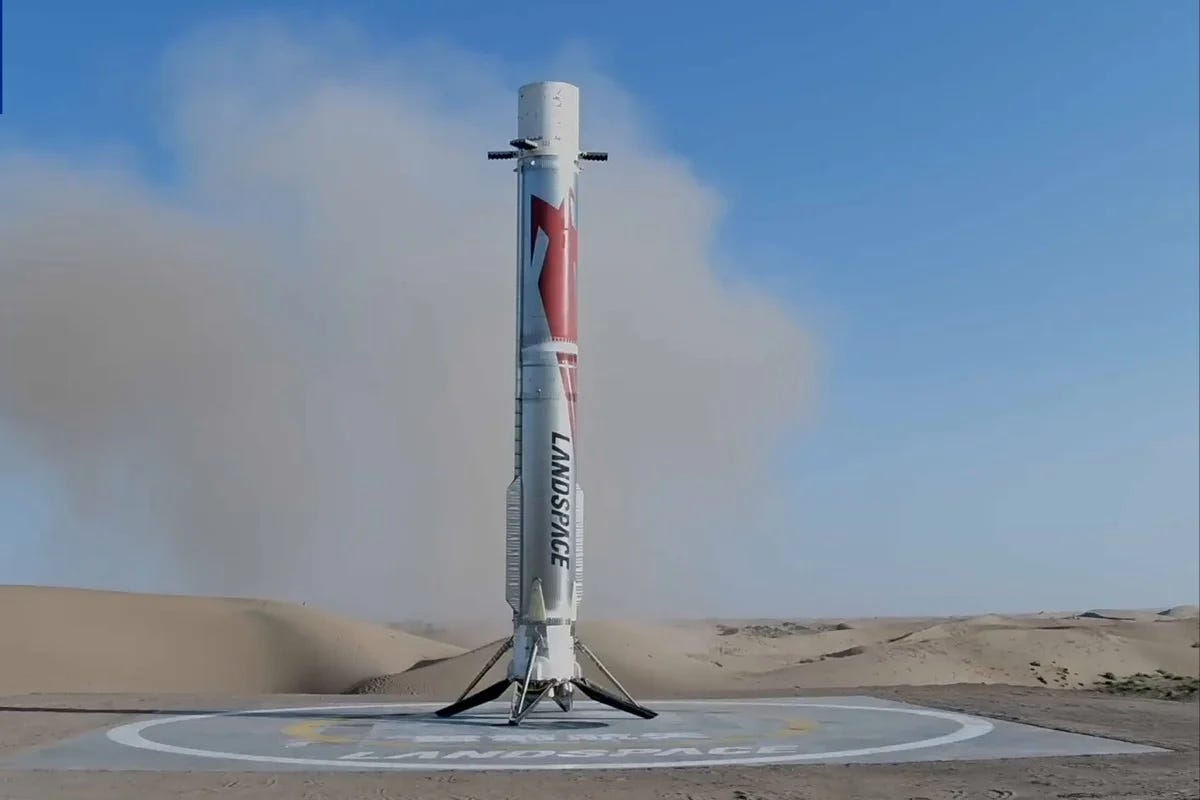
Another key area to watch is commercial space, which our upcoming tour will also touch on: Low-earth-orbit satellite constellations and their downstream applications—satellite broadband, remote-sensing analytics, and IoT connectivity—will likely have shifted from experimental to operational. However, commercial human spaceflight and space tourism will probably remain in the demonstration phase, constrained by cost, regulation, and crewed-safety requirements.
Q: China has severe constraints on access to cutting-edge AI chips. Yet Chinese AI development has continued remarkably quickly. Has the semiconductor constraint actually changed the trajectory of Chinese AI, and where are its effects most visible?
A: The constraints have indeed altered the trajectory. On one hand, they have accelerated domestic AI chip R&D; the gap with global leaders persists, but iteration continues. On the other, investment has structurally shifted upstream—toward chip design, advanced packaging, and compute leasing—to build supply-chain redundancy and resilience.
It’s not just GPUs. Constraints alter engineering decisions throughout the AI stack. Developers have stronger incentives to improve model efficiency, optimize inference, use mixture-of-experts architectures, make better use of available accelerators and reduce the amount of compute required for a given level of performance. DeepSeek became an internationally visible example of this broader pressure toward efficiency.
At the same time, substitution is incomplete. The performance gap at the frontier remains important, particularly for training the largest models and for workloads dependent on mature software ecosystems. The result is therefore neither “export controls have stopped Chinese AI” nor “export controls have failed completely.” They have raised costs and changed investment priorities while simultaneously strengthening the incentive to develop domestic alternatives.
Q: AI is increasingly becoming an information problem rather than merely a model problem: who owns reliable data, who can structure it, and who can let agents use it safely. Does China have an underappreciated advantage here because of the enormous digitization of its economy, or does fragmented and restricted data remain a weakness?
A: China possesses abundant data resources, yet vertical-domain data remains fragmented across institutions. Systematic integration is the next critical hurdle. For example, Caixin Data has invested heavily in proprietary economic and financial databases, and we currently provide RAG (Retrieval-Augmented Generation) services to major LLM companies. At the same time, we observe that some model builders rely on crude, low-cost data acquisition, which is degrading output quality. Professional-grade verification and quality-assessment services for model outputs represent a significant frontier—one that Caixin is actively exploring.
The distinction between quantity and quality will become increasingly important as AI moves into professional applications. The open internet provides enormous amounts of training material, but finance, law, medicine and industrial research depend on information that is accurate, current, structured and attributable to a reliable source. In those environments, a plausible but unverifiable answer is often not useful at all.
RAG is one way of addressing this problem by allowing a model to retrieve relevant information from controlled knowledge bases at the time a question is asked rather than relying exclusively on what was embedded during model training. But retrieval alone does not solve the problem if the underlying database is incomplete, poorly structured or unreliable.
This creates a new value chain around professional AI: acquiring and structuring proprietary data; maintaining entity relationships and historical records; retrieving the appropriate evidence; and finally verifying whether the model’s output is supported by that evidence. For institutions that have spent decades building professional information assets, AI represents not merely a threat to the traditional information business but also a potential new distribution layer for those assets.
If you want to know more details about the upcoming Robotics & AI Executive Tour in collaboration with Mr. Gao’s team at Caixin, RSVP and get full details here:

To ensure the best experience, space is limited to 20 seats. Early-bird pricing ends September 13.
You can also check out the Q&A of regularly asked questions below:

Please feel free to contact us at Baiguan_ChinaTour@bigonelab.com with any questions.
Here’s an intriguing item, Robert for your readers or investors:
ChinaMedical.ca is the first China Health Care Directory and is fully bilingual.
Imagine how influential this interactive BBS will soon become for the medical tourism industry.
Investment is <3M USD for 40%.
I am the developer/owner seeking a Chinese partner.
Dwight@humanistunion.com
1 604 836-7300