


The expert we interview today is Ms. Yijing Wang, Founder and CEO of 2060 Advisory, a China-based advisory platform working with global investors, family offices, and companies across energy transition, AI infrastructure, and industrial transformation. Her work connects policy, technology, capital and industrial reality—translating what is happening on the ground in China into investment judgment. Yijing will lead one leg on China’s next energy cycles in our upcoming Autumn 2026 tour.
Yijing also writes at 2060 Newsletter with Yijing

Baiguan: China won enormous global market share in solar panels, batteries and EVs. If that was phase one, what is phase two?
Yijing: Phase one was hardware scale. Phase two is system intelligence.
China has already demonstrated its ability to manufacture clean-energy technologies at extraordinary scale and drive down their cost. The next challenge is to make renewable power, storage, electric mobility, industrial demand, and computing infrastructure operate as one increasingly complex system.
The scale of that achievement also explains why the bottleneck is changing. In 2025, China added 438 GW of grid-connected wind and solar capacity, taking cumulative wind and solar capacity to 1.84 TW, or about 47% of the country’s total generating capacity. Wind and solar generation accounted for about 22% of total electricity consumption, while renewables as a whole supplied 38.5%. The gap between the share of installed capacity and the share of electricity actually generated illustrates the next challenge: converting abundant but variable assets into power that is available when and where it is most valuable.
Location and timing are increasingly important also because China’s renewable resources, industrial demand and population centers are not evenly distributed. In 2025, cross-provincial and cross-regional electricity trading reached 1.59 trillion kWh, while continuous provincial spot-market operation achieved near-national coverage. These mechanisms allow prices to reflect periods of surplus and scarcity more accurately and give generators, storage operators and users stronger incentives to change their behavior.
For investors, the question is no longer simply: Who can manufacture at scale? It is: Who controls the critical points that make the whole system work?
Those critical points may include forecasting renewable output, routing electricity across regions, shifting demand between hours, aggregating distributed assets and responding to real-time prices. As these functions become more important, the industry’s profit pools can migrate away from the largest physical assets and toward the companies that coordinate them.
That moves value toward grid flexibility, power electronics, energy management, storage monetization, and the integration of energy with AI and advanced manufacturing.
Baiguan: In which areas can we find next clean-tech winners?
Yijing: When hardware becomes abundant, value often moves toward the control points. The next major winner may be less recognizable than a solar-panel or EV manufacturer, but more deeply embedded in how the entire system functions.
Cooling determines how efficiently AI infrastructure can operate. Power electronics control how electricity is converted and managed. Energy trading and virtual power plant platforms connect distributed assets to electricity markets. Thermal management systems influence the performance of EVs, batteries, and data centers.
These companies may be less visible to consumers, but they can control performance, reliability, and operating economics.
China is beginning to formalize markets for these coordination functions. National policy now defines virtual power plants as market participants that can aggregate distributed generation, storage and flexible loads, with nationwide regulation-capability targets of more than 20 GW by 2027 and more than 50 GW by 2030. Subject to local rules, they can participate in medium- and long-term electricity markets, spot markets and ancillary-service markets.
This is particularly relevant to the tour’s NIO Power visit: charging and battery-swap infrastructure can begin as mobility infrastructure and gradually acquire a second role as a distributed power-system asset.
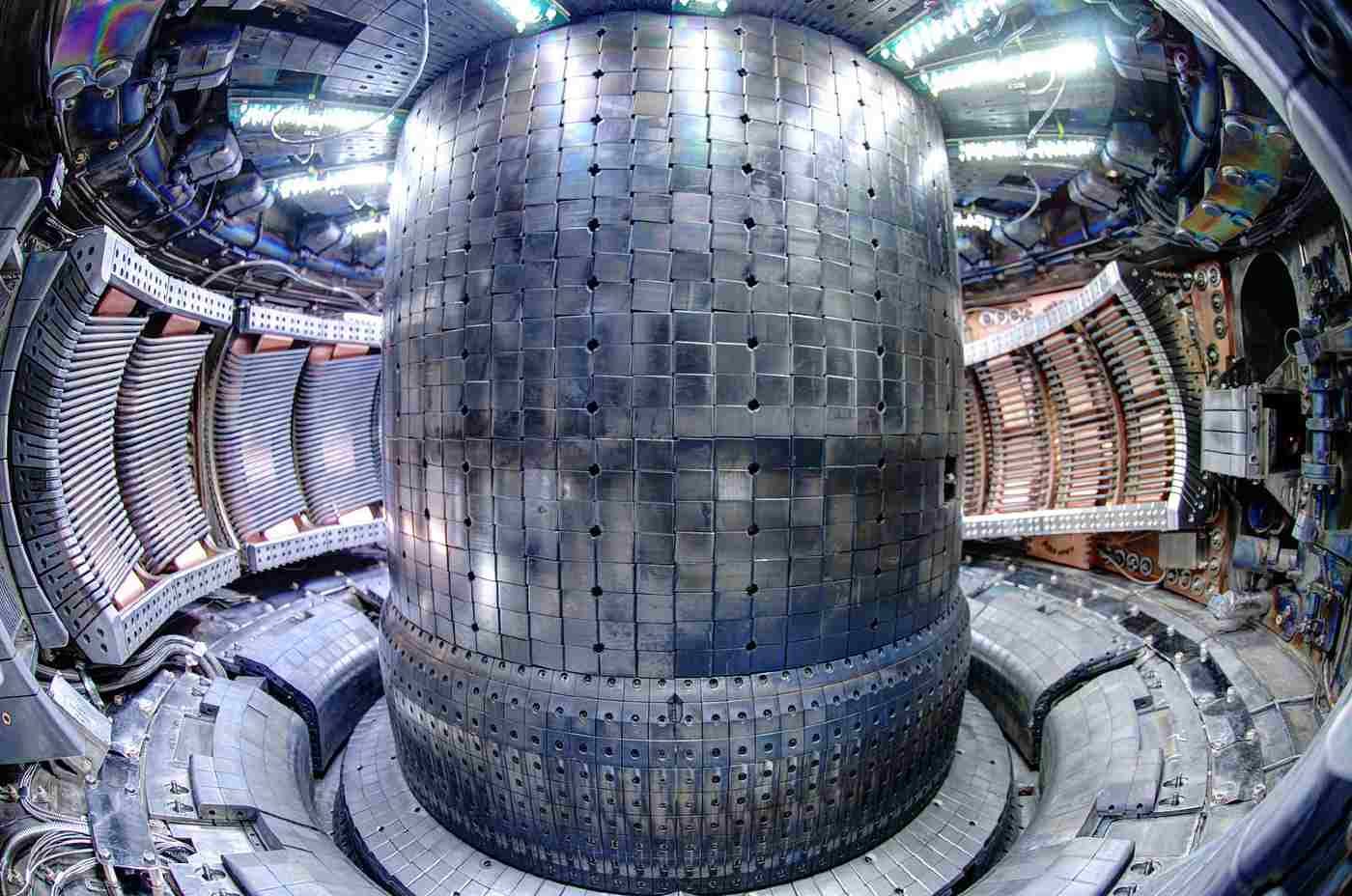
Moreover, frontier technologies such as perovskite solar cells and controlled nuclear fusion may also give rise to new winners. We will also cover them in the upcoming tour as well.
Baiguan: Does AI infrastructure create a burden for the energy transition, or a new investment opportunity?
Yijing: AI is not simply creating another source of electricity demand. It is forcing energy and computing infrastructure to be designed together.
Data centers require reliable power, grid connections, cooling, storage and backup capacity. These constraints are creating opportunities across the infrastructure stack.
The expected increase is substantial. In the International Energy Agency’s base case, electricity consumption by Chinese data centers rises by around 175 TWh between 2024 and 2030, an increase of about 170%. Data centers are also geographically concentrated loads, so their pressure on a particular grid connection, substation, or local power market can be much greater than their share of national electricity use would suggest.
The most interesting companies will not merely sell more electricity or more computing equipment. They will solve the points where the two systems meet: power availability, thermal efficiency, intelligent load management and the integration of generation and storage.
AI could become one of the greatest new demands on the power system—and one of the strongest catalysts for modernizing it. We will explore these questions during our visits to AliCloud and Sanhua.
Baiguan: If many Chinese companies can scale, where can an industrial company still build a durable moat?
Yijing: Scale is a capability. It is not necessarily a moat.
In China, one of the most difficult—and most critical—advantages is the ability to survive and compound across cycles. Many companies can grow during an industry upswing. Far fewer can continue investing, retaining customers, and protecting their economics amid price competition, policy changes, technology shifts, and demand cycles.
That resilience may come from proprietary technology, manufacturing quality, customer qualification, capital discipline, system integration capability, or the ability to identify the next growth curve before the existing one matures.
In many industrial markets, the moat is created by a combination rather than a single protected technology. A mission-critical component may be relatively inexpensive compared with the final product, but replacing it can require renewed testing, system redesign, reliability validation and changes to the customer’s production process. Companies that combine product performance with manufacturing yield, application engineering, customer certification, service networks and the ability to support clients globally can therefore retain pricing power even in markets characterized by intense headline competition.
Another increasingly important advantage is the ability to move from selling an individual product to solving a system-level problem. A company that understands how its component affects energy consumption, operating reliability, and the economics of the customer’s full system may be able to capture more value than a competitor that sells largely on unit price.
The real test is not simply whether a company can become large. It is whether it can remain strategically relevant, financially healthy, and commercially competitive across multiple cycles. In the Chinese market, that long-term adaptability is exceptionally difficult to build—and absolutely critical to survival. One case we will examine during the tour is GCL, a first-generation Chinese solar company that has remained strategically relevant through multiple industry cycles.
Baiguan: What is most often misunderstood about China’s industrial policy?
Yijing: China is often viewed from outside as a predominantly top-down system. Policy direction matters, but it explains only part of how industries actually develop.
Central policy can establish strategic priorities. State capital can support infrastructure and absorb early risk. Local governments compete to attract companies, talent and supply chains. Private companies then compete intensely on technology, cost, customers, financing and execution.
Research mapping more than 768,000 Chinese industrial-policy documents issued between 2000 and 2022 illustrates this division of labor. Only 13% were issued by the central government, compared with 45% at the provincial level and 39% at the city level. Central authorities were more likely to set strategic priorities and use regulatory tools, while local governments relied more heavily on infrastructure, subsidies, labor support, and industrial clustering to attract companies.
If you truly understand this market, you also see its highly market-driven—and in many sectors intensely capitalist—side. Companies must commercialize quickly, win customers, raise capital, recruit talent and defend market share. Policy may help create the playing field, but it does not determine which company ultimately wins.
China’s industrial system is thus best understood as a combination of strategic direction, local experimentation, private entrepreneurship and intense market competition. That interaction—not policy alone—is what international investors need to understand.
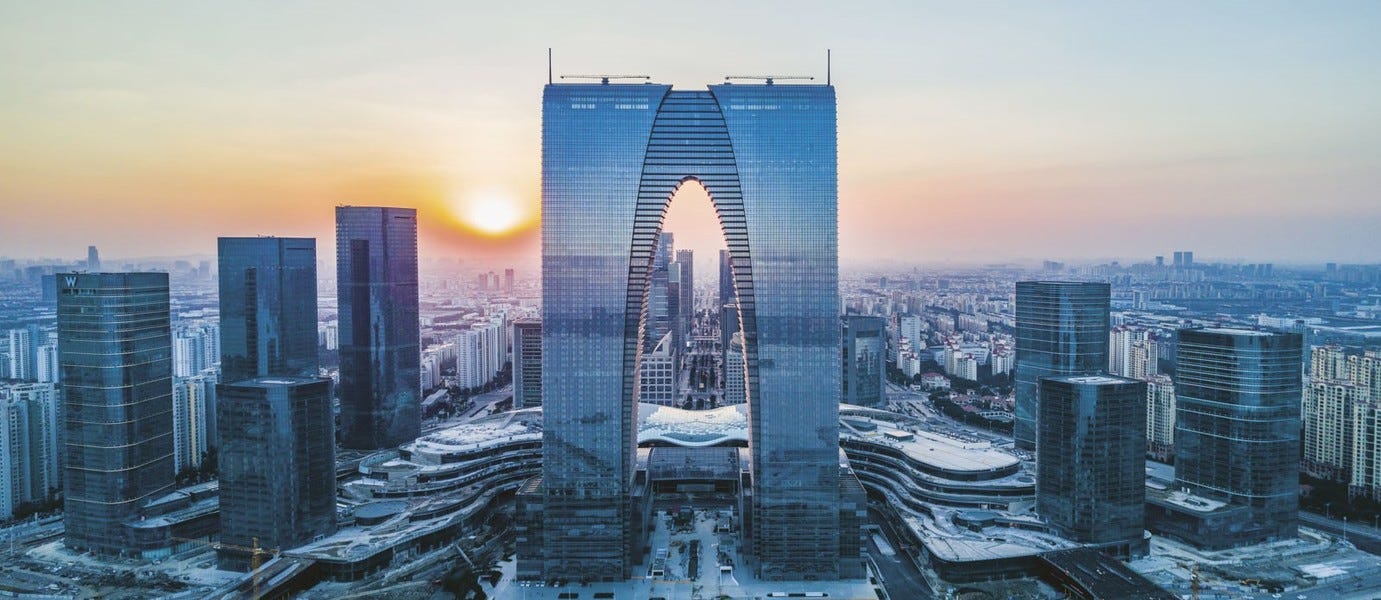
One of the best places to visit in order to have a good grasp of these central-local-business dynamics is Suzhou Industrial Park, one of China’s very first industrial parks, which we will also visit thoroughly this time.
Baiguan: What can investors understand during five days in Shanghai, Suzhou and Hangzhou that they cannot learn from reports or conferences?
Yijing: Reports can tell you what China has built. Being on the ground shows you what it looks like at scale.
Participants will enter real operating environments—not simply conference rooms—and see technologies, production facilities, energy assets and infrastructure in context. The physical scale, speed of deployment and integration across supply chains are difficult to understand from data alone.
More importantly, site visits make it possible to test the operating assumptions behind the data. Is a storage asset actually being dispatched, and how is it paid? Is a manufacturing advantage based on automation, yield, supplier density or simply lower labour and capital costs? Is a data center constrained by chips, grid access, power quality or cooling? Is a startup’s demonstration connected to a repeatable customer need? These questions are difficult to answer from a corporate presentation alone.
The second difference is access. Through 2060 Advisory’s long-standing relationships, participants will engage directly with senior leaders and decision-makers behind the selected institutions—the people responsible for strategy, technology, investment and operations. These conversations are difficult to access independently, and even harder to assemble across multiple leading institutions in five days.
Together, the site access and senior-level dialogue allow investors to understand not only what companies have achieved, but how their leaders think, what they are building next, where the real constraints lie and where future value may emerge.
If you want to know more details about the upcoming energy tour in collaboration with Yijing, RSVP and get full details here:·
RSVP Now: 2026 Autumn Baiguan China Tour “Marathon”

Aug 21 update: Click here to read a Q&A of regularly asked questions
To read a previous Q&A with Mr. Gao Erji of Caixin, our partner in the AI & Robotics leg, read here:
How would Chinese technology look like five years from now?

Last week, the 2026 World Robot Conference (WRC) concluded in Beijing. ICYMI, Amber published her own field notes about the event yesterday.
To ensure the best experience, space is limited to 20 seats for each leg.
Early-bird pricing ends September 13.
You can also check out the Q&A of regularly asked questions below:
What you will actually learn in Baiguan China Tour?

On Wednesday and Thursday, Robert hosted two live Q&A sessions about the upcoming Baiguan China Tour, attended by more than 30 of you.
Please feel free to contact us at Baiguan_ChinaTour@bigonelab.com with any questions.