


The 2026 Year of the Horse Spring Festival (Feb 15–23) will likely be remembered as the year China’s “revenge spending” matured into something more structural. Thanks to a super-long 9-day holiday, tourism numbers hit unprecedented levels, but there’s more to the story than just the record-breaking volume. For investors, it’s the deeper trends and underlying shifts that provide the real opportunities.
In this newsletter, I’ll walk you through some of my observations from this year’s festivities and share where the potential investment opportunities lie.
Overall trend: Strong demand; the rise of “Chinese aesthetic” in tourism
This year’s tourism numbers are impressive: Domestic tourism during the 2026 Chinese New Year holiday grew 19% year-over-year, reaching 596 million tourists, with tourism revenue increasing by 19% to RMB 803 billion. This means per-tourist spending, averaging around RMB 1,348, remained steady compared to last year. Outbound travel also saw a strong rebound, with a 24% year-over-year increase to 4.8 million travelers.
However, beyond these headline figures, the tourism boom is becoming more structural. The year 2026 may very well be the year when the “Chinese Aesthetic” takes full control of the tourism market.
What the Spring Festival Gala tells
To understand the social climate in China today, one can’t overlook what happened at the Spring Festival Gala, an event watched by almost every Chinese person, or at least used as background noise. This year, the Gala featured more AI, robotics, and other high-tech elements, which have already been widely discussed. However, what often goes underreported is the increasing presence of foreign-language programs—something that very rarely appeared in recent years’ Gala. This shift signals a change in the social climate, moving away from political focus toward a more open-minded, economy-driven, and everyday-life-oriented vibe.
Most notably, rather than hosting the entire performance in the central television studio in Beijing, the Gala continued its format of holding satellite events across various cities. These events highlighted the unique cultural heritage and innovative economies of these locations, further showcasing China’s diverse regional identities.
During the Chinese New Year, famous tourist cities tend to get crowded, but this year, the Gala program selected cities that are less congested yet still rich in tourism resources or unique culture. Four cities were selected to host the satellite events: Harbin, Yiwu, Hefei, and Yibin, which are expected to drive the tourism sector forward.
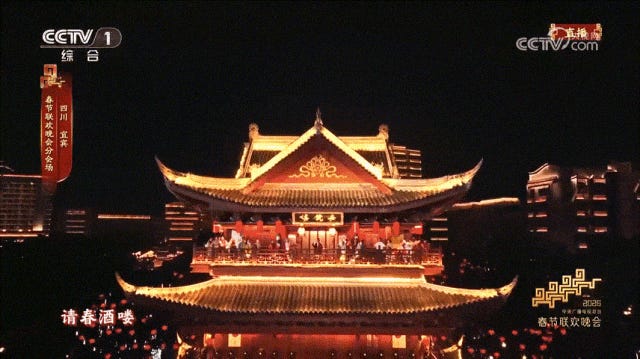
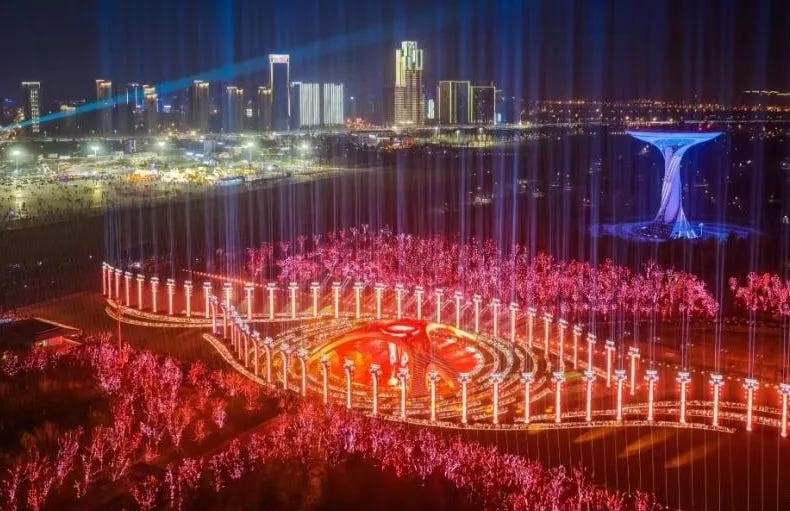
The Spring Festival Gala serves as a microcosm of this broader trend: China has been increasingly promoting smaller cities and their tourism offerings, incorporating more intangible cultural heritage, and catering to the growing interest in unique local craftsmanship and cultural heritage. We have been covering this trend since 2024, which explains why smaller and lower-tier cities have outpaced big cities, provincial capitals, and traditional tourist hubs in tourist growth in recent years.
Beyond obvious factors like crowding and rising transportation costs, tourists have developed a genuine interest in “in-depth travel”—exploring the rich cultural and historical diversity of China’s provinces. (I often feel that visiting different provinces and regions in China could feel like stepping into a completely different “country,” each offering countless unique historical and cultural experiences developed and fused over a long history. This vast diversity will continue to fuel curiosity and growth in the tourism sector.)
Investment Implications: Overall, this trend is positive for hotels and airlines. The tourism boom is unlikely to be short-lived. People are genuinely exploring various cities, towns, and cultures, not just indulging in post-pandemic “revenge consumption.”
Trend 1/4: The rebound of luxury spending
Hainan duty-free sales have seen growth since the official establishment of the Hainan Free Trade Port (FTP) last December. In January, Hainan duty-free sales grew by 45%. During the 9-day holiday period, the sales growth slowed to 15% year-over-year, but shopper counts still maintained a steady +20% year-on-year increase.
Outbound travel to Hong Kong also rebounded during the 9-day holidays, largely driven by duty-free shopping and high-end retail.
Investment Implications: The revival of luxury spending could continue this year, partially supported by the rally in the stock market, which could help improve sentiment among middle-class and affluent families. This should also benefit Hong Kong tourism and commercial properties, especially in high-end retail.
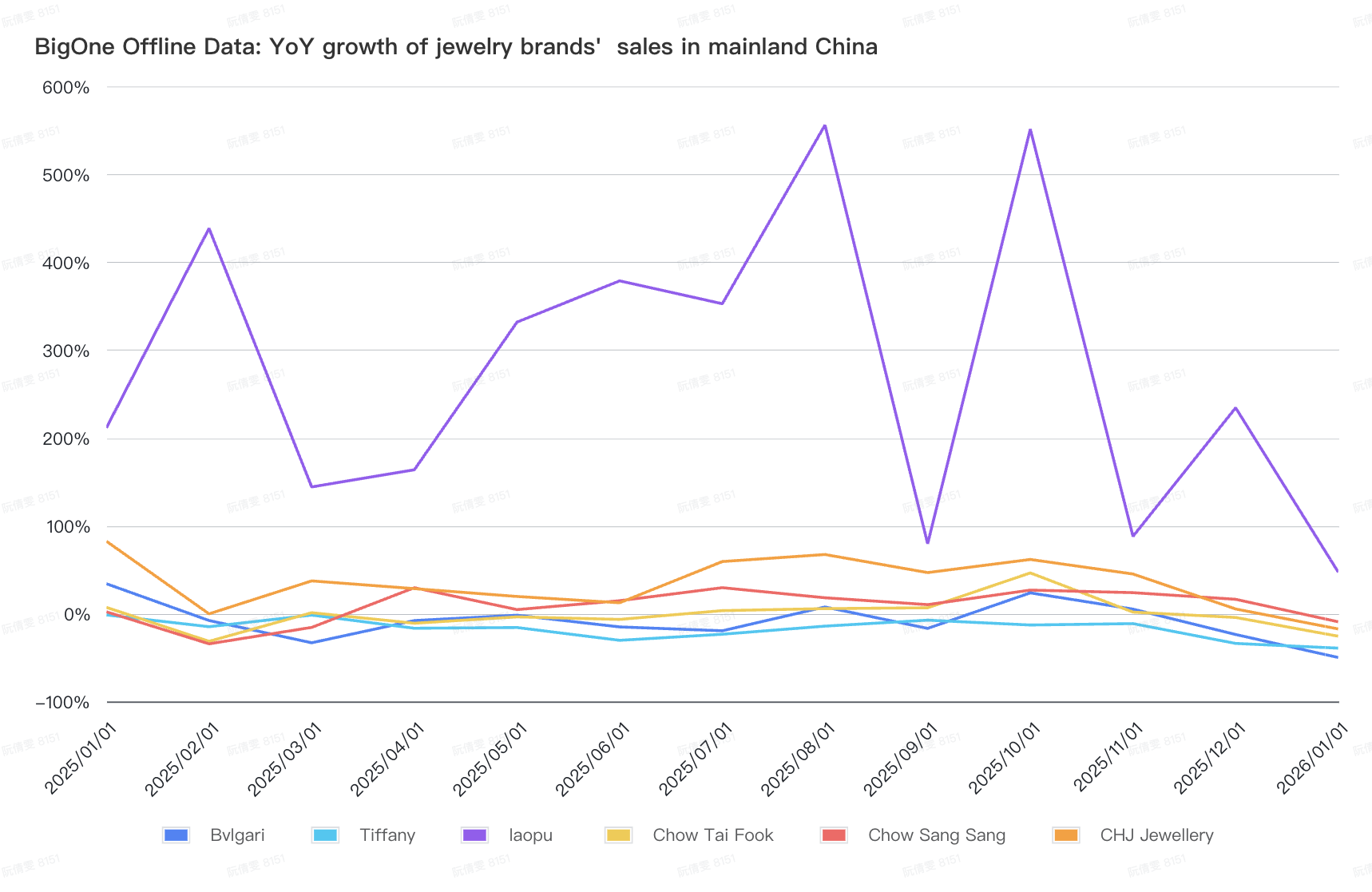
There could also be idiosyncratic opportunities, such as Laopu Gold, which benefits from the increase in jewelry spending, the cultural preference for gold in China, and the perceived value retention of gold amid rising gold prices.
Trend 2/4: “Experiential” over physical products
This is a structural trend that I previously explored in our inaugural post this year: 2026 China Equity Outlook. During this Spring Festival, live events, shows, concerts, and “emotional value” consumption continued to trend high.
During the 9-day holiday, Damai (HKG: 1060), China’s leading ticket booking platform, saw the number of performance projects grow 27% YoY. Specifically, Livehouse booking surged 65%, and immersive shows grew over 40%. Live events have become a lifestyle for the Chinese consumer.
“Mood boost” consumption, such as pop toys (潮玩), continues to trend high. Take Pop Mart, for example: without going into detail in today’s post, we still see triple-digit sales growth in January leading up to the 9-day holiday, extending the growth and IP rotation trend explored in our deep-dive previously.
Investment Implications: The rising demand for live events and “emotional” retail should be beneficial to booking platforms and IP-heavy brands.
