


This is an article for Baiguan Pro subscribers
Some of the best investment opportunities of the last several decades came from identifying big paradigm shifts.
The rise of the internet fundamentally changed how people find information (Google), buy stuff (Amazon and Alibaba), and interact with each other (Facebook and Tencent). The rise of mobile internet made Apple into a truly generational company. The demand for a decentralized store of value led to the creation of Bitcoin. The shift from internal combustion engines to electric vehicles and batteries turned Tesla, BYD, and CATL into the industrial behemoths that they are today. The rise of GLP-1 medications made Eli Lilly the world’s first trillion-dollar pharmaceutical company. And do not forget: the intelligence revolution underway right now has made Nvidia the first 4-trillion-dollar company in human history.
By definition, great structural changes take time to take shape. These trillion-dollar changes, affecting the lives of billions of people, do not happen in an instant. Also, by definition, truly great changes happen only rarely.
This means that if you are patient and spend enough time thinking about it, you can identify big opportunities ahead and have enough time to study it and watch it unfold. This is happy news for long-term investors.
Baiguan is a China-focused newsletter and research service. But we have a global perspective, and we are excited about major technological and industrial shifts that affect EVERYONE. After identifying one such shift, we examine which specific companies or industries in China will benefit the most from it.
When we look ahead, we see one area that’s on the cusp of a big fundamental shift again. It’s not an entirely new sector, but its true potential has yet to be realized. It’s the future when we will have fully autonomous smart driving systems.
Sizing the opportunity
Intuitively, having the world run by driverless vehicles sounds BIG. But how big?
In the US alone, roughly 3 trillion miles are driven by passenger vehicles each year. The average cost of ownership in the US is often cited at $0.7- $0.8 per mile, while current ride-hailing costs are typically $2 per mile. This translates into a total addressable market of $2-$6 trillion. (Note that we do not try to forecast the reduction in costs in a fully autonomous world, nor do we forecast the increase in rides either. This is a thought experiment with the intention to visualize the scale of opportunity, not about doing an accurate projection.)
The opportunity in China is also huge. China currently has approximately 366 million registered private passenger vehicles, and various studies indicate that these vehicles average 10,000 kilometers (roughly 6,200 miles) annually. That translates to 2.27 trillion miles driven per year, which is already comparable to the level in the US.
Our own back-of-the-envelope calculation puts the average cost of ownership in China at ~$0.45/mile, while ride-hailing costs are much lower than in the US, at ~$0.6-0.7/mile. Overall, the total addressable market for China’s robotaxi is around $1.2 trillion - $1.6 trillion.
It’s noticeable that the TAM for robotaxis in China looks smaller than in the US, reflecting lower car ownership per capita and lower labor costs. However, both of these factors have strong secular tailwinds that will help them grow faster in China, making it possible for the final market size in China to be larger than the US.
And for this exercise, we haven’t even factored in the size of the opportunity for the rest of the world, which is conceivably larger than US + China combined.
We are almost ready - technologically, economically, and culturally
All of this market-sizing exercise won’t mean a thing if the underlying tech isn’t ready. But what we observe is that the technology is no longer just on paper; it is now in daily operations and is fast approaching maturity worldwide.
In the US, Waymo is currently running at a run rate of 500,000 paid rides per week across more than 10 US cities. And estimates put Waymo’s market share in San Francisco’s operating zone, one of its earliest, already surpassing Lyft's.
When consumers actually experience a mature robotaxi service, the feedback is overwhelmingly positive. According to Waymo’s own rider surveys, an impressive 93% of their customers reported satisfaction with their rides, often citing the smooth driving style and the privacy of an empty cabin as key benefits. More tellingly, reports have surfaced of Uber users actively canceling rides when assigned a human driver if a Waymo vehicle is available as an alternative in cities where the service is integrated.
In China, the scale of deployment is equally aggressive, if not more. Baidu’s Apollo Go, one of the country’s largest operators, recently reported a peak of over 300,000 fully driverless weekly rides in Q4 2025, surpassing 20 million cumulative rides globally across 26 cities, and the company has announced it achieved per-vehicle profitability there late last year. Meanwhile, competitors like Pony.ai and WeRide have both pushed their global fleets past the 1,000-vehicle mark, with Pony.ai targeting over 3,000 robotaxis across 20 cities by the end of 2026.
A growing body of data also suggests that Chinese consumers are increasingly open to, and in some cases prefer, autonomous driving over human-driven vehicles. In China, the acceptance rate is particularly high. A 2025 McKinsey survey found that Chinese consumers show a significantly higher willingness to pay for autonomous features than their Western counterparts, with many citing safety and convenience as the primary drivers. Furthermore, a report by Rest of World highlighted that an overwhelming 85% of Chinese consumers expressed comfort with the idea of riding in a fully autonomous vehicle, a stark contrast to the persistent skepticism often seen in the US.
Our personal experiences point in the same direction. When test-riding Pony.ai’s robotaxis in Pudong, Shanghai, in preparation for a part of the upcoming Baiguan China Tour, we found the experience exceeded our expectations. The driverless vehicles are both fast and smooth in complicated situations. We left with the sense that we would prefer riding in a robotaxi to riding with human drivers. (You can also check out Amber’s experience with Baidu Apollo Go in Wuhan last year.)
Robotaxi just feels inevitable.
The main bottleneck
A May 2025 report by Goldman Sachs forecast that China’s robotaxi fleet would grow more than tenfold from approximately 4,000 vehicles in 2025 to roughly 500,000 by 2030. Looking further ahead. They also projected that the fleet could grow to 1.9 million vehicles by 2035, achieving a 25% penetration of the entire ride-hailing market.
These figures sound impressive. However, we couldn’t help but wonder, should it not be happening faster? 500,000 vehicles in 5 years sounds very conservative, given it’s a tiny fraction (~0.1%) of all passenger vehicles running on the road in China today, and the fact that technology seems almost ready now.
We believe two crucial factors are holding back the industry from realizing its full potential in China, and they are two sides of the same coin: low labor costs and labor-related political concerns.
Chinese regulations regarding robotaxis have shown two faces at once. On the one hand, local governments across the country are aggressively approving pilot zones. Baidu Apollo Go alone has entered around ~20 cities in China by the end of 2025.
Yet at the same time, all of the pilot zones are exactly what their names suggest: pilot zones, areas with light traffic and far away from population centers. In Baidu’s stronghold city of Wuhan, for example, after years of expansion, the pilot zone still covers only the area surrounding the main population center. In Shanghai, most pilot zones are located in the suburbs, which take at least 1 or 2 hours to reach from the city center.
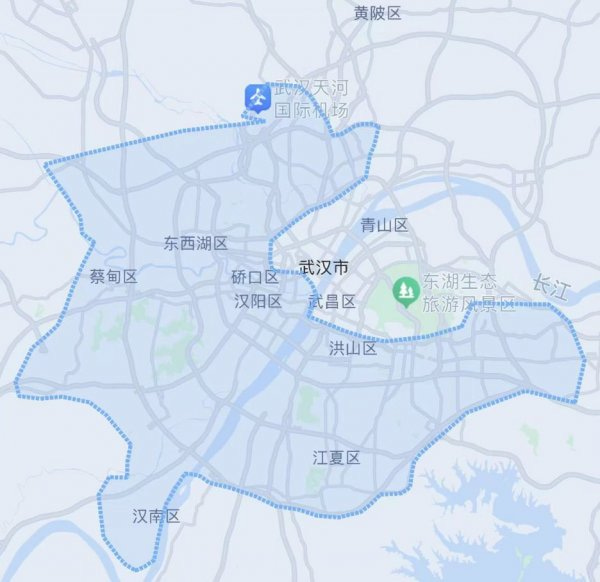
This contrasts sharply with the US, where Waymo already covers the entire Bay Area, from San Francisco to San Jose.
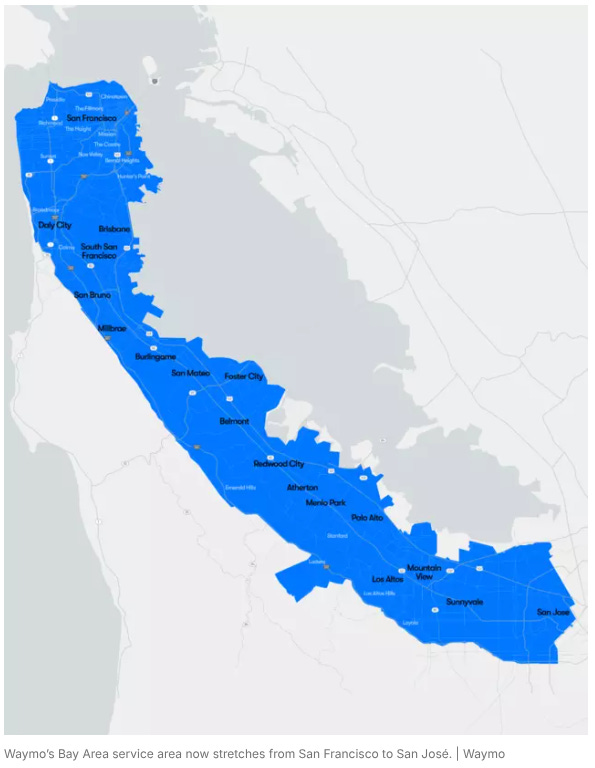
We believe road-safety concerns related to China’s much more complex road environment can only partially explain the gap here.
When we look at the robotaxi in China, we cannot ignore the huge elephant in the room: China currently has an unemployment issue. There is currently an oversupply of low-skill labor. This affects the robotaxi market from two vectors.
First of all, at ~$0.7/mile, China’s ride-hailing cost is low, making robotaxi services a less compelling economic choice than they are in the US. On the other hand, the Chinese government sees social stability as a top policy priority, so allowing driverless services to grow unchecked will add further fuel to the more pressing fire. In the meantime, Beijing does not want to fall behind the US in this strategic sector. Therefore, it is juggling between policy priorities here by allowing more and more “pilots” in a low-key manner, without pulling the real trigger.
This labor and policy bottleneck is what we think would hold China back from realizing the full potential of robotaxi in the next few years. Within the next 5 years, we do not expect explosive growth in this sector. But as China’s population is on a guaranteed path of aging, we could see a drastic switch towards autonomous and an explosive inflection point, possibly in the 5-10 year timeframe.
We thus remind you that you should not expect this research piece to yield a near-term result, but rather to prepare you psychologically for one of the biggest long-term trends.
Four main areas to watch
With the context set, evaluating how to capitalize on this trend requires analyzing four distinct investment directions:
L4 companies (Pony.ai, Baidu, etc.)
OEMs (Xpeng, Nio, etc.)
ride-hailing platforms (Didi, Gaode, etc.)
picks-and-shovels component providers (Hesai, Horizon Robotics, etc)
We do not like all of them. In fact, many of them may become value traps despite the immense opportunity in this sector. In the section below reserved for Baiguan Pro subscribers, we will dive deeper.
[Once again, for existing Baiguan paid subscribers: We are offering you a free upgrade, giving you full access to all Baiguan Pro content. To upgrade, please REPLY to this email with the email address associated with your paid subscription, or send an email to baiguan@bigonelab.com. We are processing these upgrades manually through the end of the second quarter (June 30).
Please note that if you opt-in to the Baiguan Pro tier, your subscription will renew at the new rate if auto-renewal is enabled.]