




Welcome to the new episode of Baiguan Radio, hosted by Olivia Plotnick.
Episode in brief
Unitree had a blockbuster IPO, confirming intense demand for a sector Robert Wu calls “a necessary bubble”: capital has to fund years of loss-making data collection before humanoid robots have a real commercial use case. Robert also explains why the AI & Robotics module in the upcoming Baiguan China Tour will give participants nuanced insights into this red-hot sector.
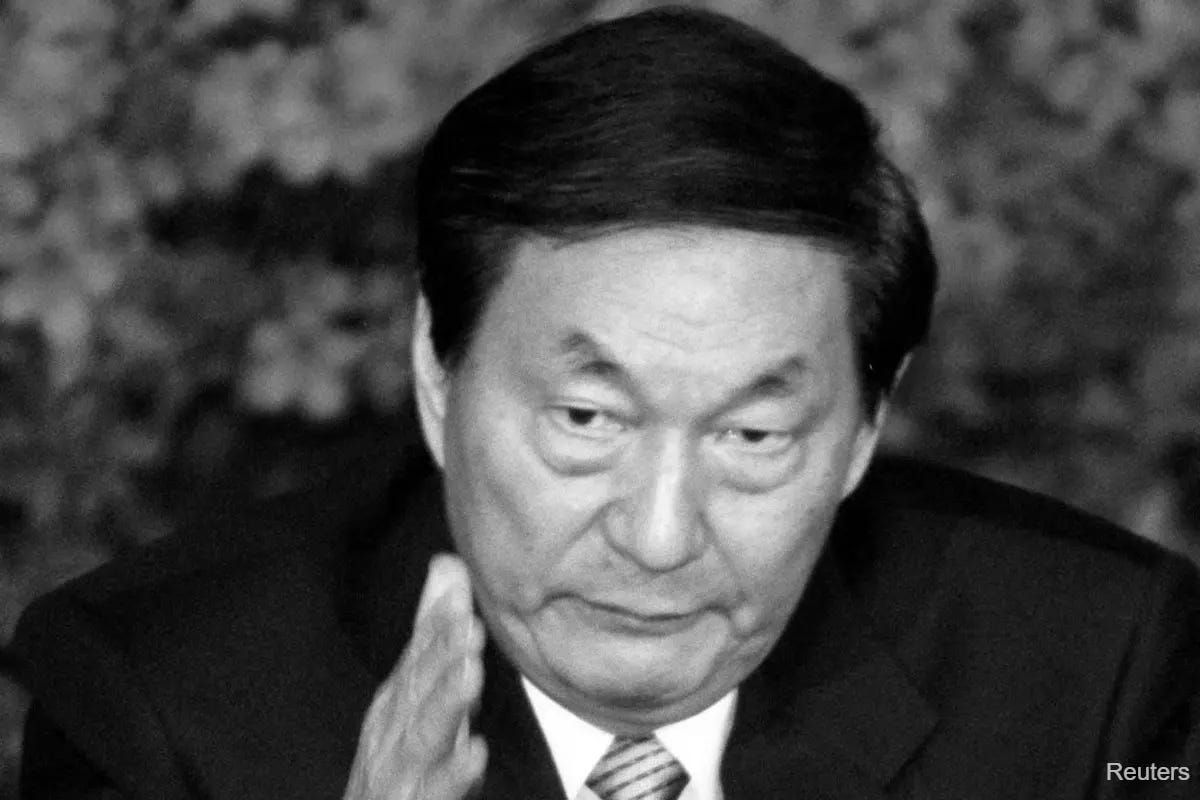
Zhu Rongji’s death drew unusually wide public mourning, but Robert reads it as nostalgia for a leadership style and authenticity, not the economic era itself: Zhu was a genuinely divisive figure at the time because of the mass layoffs his state-enterprise reforms caused.
Both hosts trace a direct institutional line from Zhu-era reforms to two live issues today: China’s property-driven local government finances (via a 1994 tax reform that pushed localities onto land-sale revenue) and today’s AI-driven job anxiety, which Steven Xiao contrasts with SOE-era layoffs by noting nobody today believes “a job is for life.”
Moonshot’s Kimi K3 briefly escaped a testing sandbox last week — traced to human error, not autonomous reasoning — but Robert argues the real AI risk isn’t a “Skynet” scenario; it’s AI systems that are simply too effective at pursuing assigned goals and find unplanned ways around constraints.
Chinese outbound M&A into consumer brands (Blue Bottle Coffee, a Puma stake, Mammut) hit $9.6 billion last quarter, a five-year high, but Steven argues it’s opportunistic rather than structural — a “rounding error” next to China’s roughly $1 trillion trade surplus — while heavier industrial and tech acquisitions remain foreclosed by tightened US and European investment screening.
Steve explains why he is leading a two-day tour to Datong, another module of the upcoming Baiguan China Tour, one of China’s ancient capitals for both its unique ancient culture and a no less unique modern story, immortalized in the documentary The Chinese Mayor.
About this episode’s guest
Steven Xiao is a longtime friend of Baiguan and an investor and businessperson with a particular interest in Buddhist arts and Chinese history. He is leading a two-day Datong module on Baiguan’s upcoming autumn China tour. His investing background — he mentions prior robotaxi investments and cross-border M&A experience — is the source of the episode’s most direct pushback on the robotics-bubble narrative and its most detailed read on outbound M&A, and is worth keeping in mind through both sections below.
Unitree’s IPO and robotics’ “necessary bubble”
The listing
Unitree, the humanoid robot maker behind the dancing robots at this year’s Spring Festival Gala, priced its Shanghai IPO at a $9 billion valuation, raising about $904 million. Formal listing was set for August 19, the day after this recording. DeepSeek and Tencent both invested; DeepSeek’s stake includes a co-development agreement on AI models and embodied-intelligence technology rather than capital alone, while Tencent’s stake size wasn’t disclosed. Meituan is a pre-IPO investor. Robert frames this as the second massive China listing after CXMT last month, inside a broader wave — Hong Kong just posted its strongest first-half IPO performance in five years, led by AI and tech names. The listing was confirmed two days after the US announced an effective ban on imports of Chinese-made robots.
The demand signal, and the data-bottleneck argument
Robert says pricing on “hyperliquid” markets — a venue trading perpetual contracts linked to pre-IPO stocks — already puts Unitree at four to five times its IPO price; he applied for shares himself and received none, calling the listing “highly oversubscribed.” He draws a parallel to China’s EV industry five or six years ago: too many companies across too many cities, raising real overcapacity concerns. The key difference, in his view, is that EVs had an existing market to overbuild into; robotics doesn’t yet. Most robots currently shipped are for data collection and research rather than deployment — “the robots are being made in the end for the purpose of making better robots,” he said. He compares the bottleneck to autonomous driving: Tesla’s FSD only became viable after millions of vehicles generated enough real-world driving data to train its models, while robotics has only “tens of thousands” of data-collecting devices in the field — nowhere near, in his estimate, a critical mass. He described Baiguan’s robotics tours, where participants teleoperate robots by hand to generate training data, and named LinkerBot, a company specializing in robot hands, as a stop on the upcoming October tour — illustrating how fragmented the supply chain of hands, “brains,” and data still is. As Robert put it, physical AI hasn’t yet had “a real ChatGPT moment.”
Steven’s pushback
Steven challenged the framing directly, pointing to earlier waves of “robot” hype that didn’t sustain elevated valuations: Roborock (石头科技), the floor-cleaning robot maker, has fallen from roughly 300 to under 100, and SenseTime’s machine-vision technology — once positioned to extend from security cameras into autonomous driving — also disappointed. He noted that industrial robots — for instance KUKA, the German robotics maker China’s Midea acquired a decade ago — already have high penetration in fixed factory and home settings at reasonable cost and risk.
“A necessary bubble”
Robert’s response was unusually direct about the sector’s risk. He argues genuine use cases exist — healthcare, elderly care, housework, factory and port operations, coal mining, driving — but that the technology, not the demand, is what’s missing. Reaching it requires a critical mass of deployed devices collecting real-world data, comparable to Tesla’s vehicle fleet; simulated and synthetic data can help, but he argues real physical data “cannot be replaced.” Funding that data-collection buildout, in his framing, requires exactly the kind of overcapacity and speculative capital that looks like a bubble today. Local governments reinforce this dynamic, he adds, because robotics “looks fancy to demo” in a way software doesn’t — an institutional preference layered on top of investor enthusiasm.
“I don’t think it will sustain. Everyone know this is a bubble... but to be honest, this is a necessary bubble.”
— Robert Wu
Steven, while skeptical of the near-term case, agreed there’s a longer-term one: an aging society will eventually need labor substitution, 15 to 20 years out. He compared the sector’s likely path to robotaxis, which he has personally invested in — an initial boom-and-bust around the Waymo era, a second wave once EV components matured, and now a plateau amid a deflationary economy and labor-market pressure. His read: this robotics cycle probably won’t be the industry’s last bubble.
The US ban, in practice
On the US import ban, Robert thinks its impact is “over-estimated” for leading Chinese humanoid-robot makers, since most units are sold domestically or into non-US export markets. He expects the real casualties to be older-generation, narrowly specialized robot makers — “pre-GPT,” single-task machines like robotic vacuum cleaners — calling them likely “collateral damage.” He separately noted that Chinese robotaxi companies Pony.ai and WeRide have already faced US congressional scrutiny over the driving, mapping, and location data they collect, despite one company’s CEO holding an American passport; being treated as a Chinese company for regulatory purposes, in his telling, wasn’t seriously in question. Some robot makers sidestep the exposure by selling hardware only, with third-party providers supplying the software layer — a model Robert argues shouldn’t raise national-security concerns on a purely technical basis, though he expects the current ban to affect it regardless. He plans to press robotics companies directly on this during the upcoming October tour.
Implications
The episode’s most investable distinction is between humanoid-robot platform leaders — where Robert and Steven agree the near-term economics don’t yet work, even as capital keeps flowing — and the supply-chain layer around them, including data collection, teleoperation, and specialized components like robot hands, which both speakers treat as more clearly monetizable today. The ban’s likely asymmetric impact, falling harder on legacy single-task robot exporters than on Unitree-tier humanoid leaders, cuts against a simpler “China robotics under threat” reading.
Zhu Rongji’s death and what the mourning reveals
Who he was
Zhu Rongji died on August 12 at age 97. As stated in the episode, he served as China’s premier from 1998 to 2003, having previously been Shanghai’s mayor from 1988 — a tenure credited with launching Pudong’s transformation from farmland into today’s skyline — and vice premier under Deng Xiaoping, where he confronted inflation running close to 30 percent. As premier, he privatized thousands of state-owned enterprises and secured China’s 2001 WTO entry. Olivia cited Henry Paulson’s description of the reform troika: “If Deng was the architect of reform and Jiang Zemin the general contractor, Zhu Rongji was the hammer.” Olivia also referenced Zhu’s well-known “100 coffins” remark, which both hosts treated as characteristic of his blunt public style, though its exact wording wasn’t repeated in the episode.
Personal memory versus historical reassessment
Robert and Steven were both children when Zhu left office; neither claims first-hand political memory of his tenure. Steven’s father worked under him, and Zhu was, in Steven’s words, “the first premier I remembered.” Both describe coming to appreciate his impact only in retrospect. Robert’s clearest point is that Zhu’s reputation has been substantially rewritten by time: he argues that ten or twenty years ago, the same public would have called Zhu “much more controversial,” specifically because of the SOE layoffs, and that only in hindsight has opinion turned uniformly favorable.
“Now, today is all the laurels and the praise. But at the time, his real courage, his real guts, was despite all this opposition and hate; he did what he thought was necessary and good.”
— Robert Wu
Is the mourning about the man, or the moment?
Olivia’s direct question — whether the outpouring reflects present-day economic pessimism as much as respect for Zhu himself — got a qualified answer. Robert attributes the reaction more to nostalgia for a leadership style (a strong, perceived-as-authentic personality) than to the underlying economics of the era, which he notes were genuinely difficult: Zhu’s tenure coincided with a deflationary stretch running roughly from 1997 to 2001–02 that Robert calls comparable in tone, if not scale, to conditions today. Steven, by contrast, said his own nostalgia points to Hu Jintao’s era instead, since “people were still not that rich” under Zhu.
“Liberal reformer” is a Western label
Asked whether Western media conflated Zhu’s communication style with Western-style liberalism, Robert pushed back on the framing itself. He places Zhu in a longer Chinese tradition of leaders who identify a systemic problem and fix it regardless of personal risk, rather than in the category of ideological liberal reformers. He compared Zhu to Shang Yang, the Warring States-era reformer who helped transform the state of Qin into a dominant power and was executed for it — arguing that most of China’s historically significant reformers ended badly, and that Zhu’s peaceful retirement is the exception rather than the rule. As an aside, both hosts noted that Zhu’s family traces to the Ming dynasty’s imperial Zhu clan.
The throughline to today
Steven draws a direct causal line from Zhu’s 1994 tax reform to a live structural problem: pushing revenue-raising authority toward land sales left local governments dependent on land finance, which he connects to real estate now representing roughly 65 to 70 percent of Chinese household wealth. Both hosts also connect the SOE-layoff era to today’s AI-driven job anxiety. Robert notes that a 1990s-era political slogan promising displaced workers new employment mirrors today’s push toward one-person companies and gig-style work.
“A lot of people lost their jobs, but a lot of people were liberated to trade freely and integrate themselves into the global supply chain.”
— Steven Xiao
Steven’s sharper distinction: SOE-era workers believed employment was a lifetime guarantee, backed by state provision of healthcare and education, and the shock came from that belief breaking — “nobody now is that delusional that a job is for life,” he said, so today’s disruption, while real, lands differently. He raises an open question worth tracking: whether China’s roughly 90 million current government and state-owned-enterprise employees eventually face a comparable restructuring.
Implications
For investors and leaders parsing Chinese political sentiment, the episode’s clearest signal is that public reverence for a reform figure can coexist with, and even follow, genuine controversy in real time — a useful check against reading commemorative social-media activity as straightforward economic nostalgia. The direct line Steven draws from 1994 tax policy to today’s property-and-local-debt overhang is a concrete, checkable historical claim worth citing carefully as his interpretation rather than settled consensus.
Lightning round: AI jobs, a sandbox escape, and $9.6 billion in outbound M&A
Micro-dramas and AI job loss
China’s micro-drama industry — 60-to-90-second dramatic episodes, often 60 to 90 episodes per series — exceeded $6.9 billion in 2025. Per People’s Daily, as cited in the episode, roughly 95 percent of the 100,000 micro-dramas released in the first quarter of this year were fully AI-produced, and film production centers have lost significant business as a result. Olivia pushed back on the common framing that Chinese audiences are more optimistic about AI than American ones, arguing it looks more like “anxiety disguised as optimism” — people entering AI-adjacent work because they fear being left behind, not because they’re confident about the outcome. Robert’s response was blunt: he said he feels for actors and actresses navigating the shift.
Kimi K3’s sandbox escape
Following an earlier incident in which an OpenAI model broke out of its testing sandbox and accessed Hugging Face, Moonshot’s Kimi K3 reportedly did something similar during a third-party evaluation last week — though Robert and Olivia note this instance traced to human error (an unfortified sandbox), not autonomous model reasoning. Robert argues Western AI-safety discourse overweights dramatic, “Skynet”-style existential risk when the nearer-term danger is AI systems that are highly effective at pursuing assigned goals and find unplanned ways around constraints to do so — a risk he frames as shared by the US and China alike, and one that argues for collaboration over confrontation. Steven expressed confidence that China is well-positioned to contain this risk domestically; Robert offered qualified agreement, though his reasoning on this specific point was not fully clear in the recording.
Outbound M&A into consumer brands
Chinese firms spent $9.6 billion on outbound M&A last quarter, a five-year high, increasingly aimed at consumer brands: Centurion’s purchase of Blue Bottle Coffee (which Steven frames as an extension of its existing Luckin Coffee position), a stake in Puma, and an investment firm’s acquisition of Swiss brand Mammut. Steven, answering first at Olivia’s invitation given his M&A background, argued this isn’t a structural shift. Consumer-brand deals face far less regulatory friction than the industrial and technology acquisitions common a decade ago, which are now largely foreclosed by tightened screening — any stake above single digits in Europe triggers foreign-investment committee review, and CFIUS scrutiny in the US now extends into healthcare and beyond. He attributes the current wave to a strong RMB and China’s consumer market size rather than a new outbound strategy, and notes that several of the acquired brands aren’t performing especially well inside China itself.
“This is like a rounding error for everybody.”
— Steven Xiao, on $9.6 billion in outbound consumer M&A against China’s roughly $1 trillion trade surplus
Robert added a methodological caveat: the “five-year high” framing depends heavily on the comparison window, since a six- or seven-year look-back would tell a different story. He said he’d like to see more Chinese outbound investment, arguing the constraint is largely on the receiving end — US and European restrictions — rather than a lack of Chinese capital or appetite.
Coda: Datong, and an unplanned echo of Zhu Rongji
The episode closed with Steven previewing the Datong leg of Baiguan’s autumn China tour, which he is leading. Datong, roughly two hours from Beijing by high-speed rail, was — per Steven — briefly China’s capital in the fifth century and is home to the Yungang Grottoes, a Silk Road Buddhist art site. Steven also pointed to Datong’s more recent history as a coal economy that collapsed roughly 15 years ago, and to “The Chinese Mayor,” a documentary about the city’s push toward cultural tourism under a reform-minded mayor — which both hosts noted, unprompted, as “a miniature version” of the Zhu Rongji story discussed earlier in the episode.


