


On Wednesday and Thursday, Robert hosted two live Q&A sessions about the upcoming Baiguan China Tour, attended by more than 30 of you.
This post highlights some of the most important questions. Part 1 covers the tour’s content, and Part 2 addresses practical and logistical concerns.
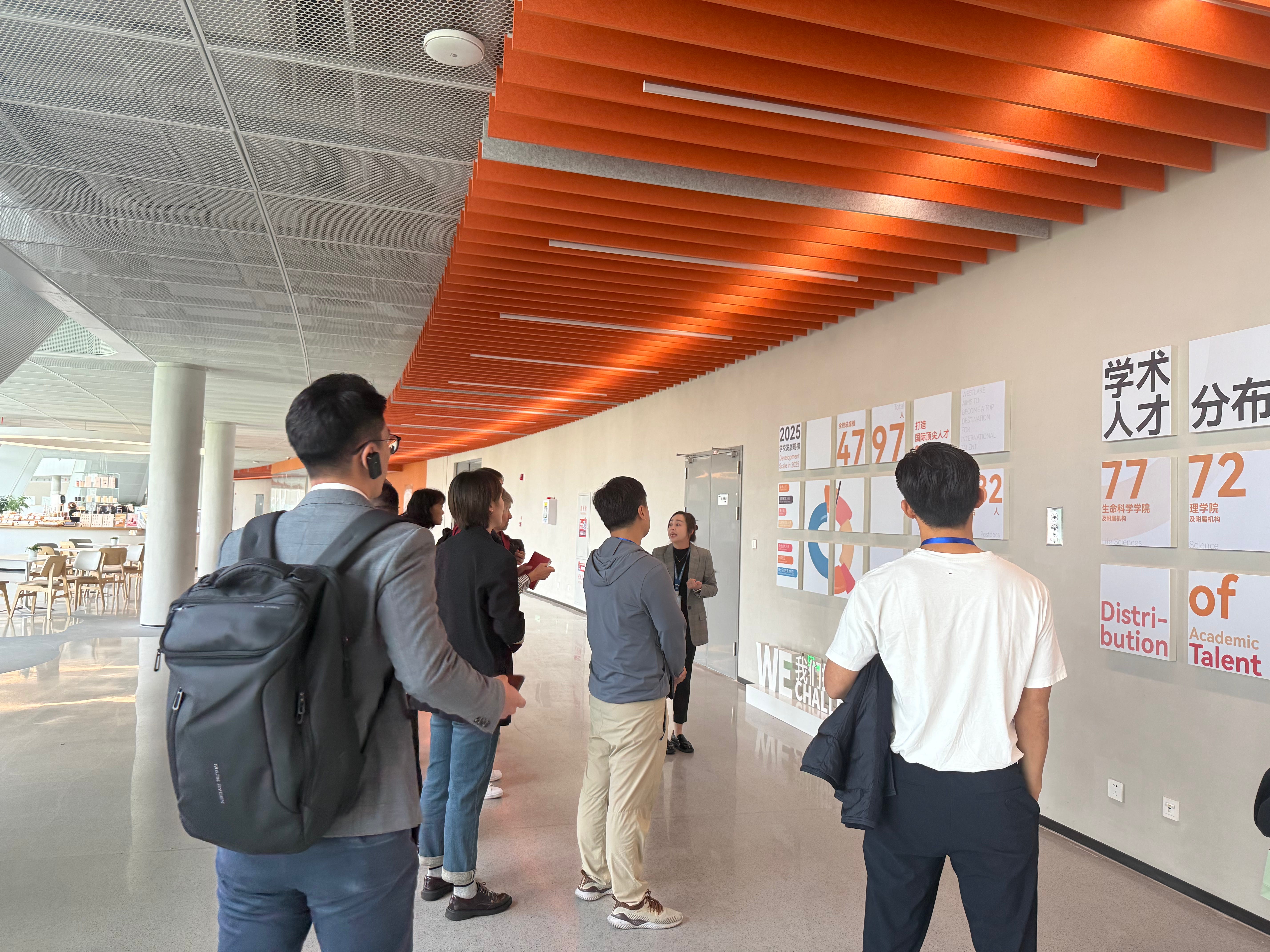
Part 1: the questions that matter most
1. There are already many China tours. Sellside banks also organize tours. What makes Baiguan’s different?
The simplest answer is that access is only the raw material, but interpretation is the product.
Baiguan did not begin as a tour company. We began as a data and research company serving institutional investors and global companies that needed to understand the Chinese market. This newsletter came later, and the tours grew out of readers asking us to take them into the companies, industries, and cities we had been writing about.
That unique background shapes your experience. Of course, the relationships and senior access matter. But a company visit on its own is only one data point. Every company has a story it wants visitors to hear. Our job is to explain how that story fits into the broader industry, what the company did not say, where its incentives lie, and which claims deserve more skepticism.
Some of the best parts of our previous tours happened between formal meetings: on the bus, over dinner, or after a factory visit, when participants and the Baiguan team debated whether the company we had just seen was telling the whole truth. That layer of context is difficult to reproduce on a standard tour, especially the ones that are organized by investment banks.
“Baiguan” in Chinese means “100 perspectives.” The purpose is not to give you one approved view of China. It is to give you enough perspectives to construct your own.
Another unique aspect of our tour that you don’t easily find on investment bank tours is the strong bonding among our participants. More on this in the question here.
2. How do you stop the trip from becoming a sequence of polished corporate presentations?
We treat what a company says as evidence, not as a conclusion. Before and after visits, the Baiguan team and our specialist partners frame the industry, identify key questions, and debrief on what we heard.
We also design the itinerary around bottlenecks rather than spectacles. In robotics, for example, we are not interested in taking participants around Beijing merely to watch humanoid robots dance. We want to look at the hard parts: dexterous hands, mass production, cloud infrastructure, standards, deployment and data. In manufacturing, we want to understand why one ecosystem can automate soy sauce bottling and scale advanced robotics at the same time.
The tour is not designed to show off China’s strengths, nor do we avoid its weaknesses. The point is to see the system closely enough to form an informed judgment.
3. How senior and unusual is the access?
On the industry tracks, most planned meetings are with senior managers, C-level executives, or founders. On the Beijing Robotics & AI track, our collaboration with Caixin Data gives us access to senior management and founding-team members at leading foundation-model companies such as Moonshot AI (Kimi) and Zhipu AI (GLM). The planned itinerary also goes down the robotics stack, including companies working on dexterous hands, and into commercial space, an area that is rarely accessible to foreign visitor groups.
The same principle applies elsewhere. The manufacturing track includes senior dialogue with established industrial leaders and younger deep-tech companies.
Any planned meeting can be affected by last-minute scheduling or security changes. Where necessary, we will provide alternatives of equivalent caliber. But the level we design for is decision-maker access, not showroom access.
4. Who typically joins the tour?
We cap every track at 20 people, and our previous groups have usually had between 15 and 20. That is small enough for everyone to ask questions, get to know one another, and continue discussions outside the formal program.
Roughly half of participants come from investment backgrounds: family-office principals, institutional investors, and private investors with existing or prospective exposure to China. The other half are entrepreneurs, corporate executives, senior managers and engineers from large and small companies.
Geographically, past cohorts have been genuinely international, with substantial participation from Southeast Asia, the Americas and Europe, along with guests from India and elsewhere. The common denominator is not nationality or job title. It is intellectual curiosity and a willingness to engage seriously.
A good cohort is one of the three main sources of value, apart from access and curation. Participants not only learn from the companies and from us; they also learn from each other’s questions, disagreements, and professional experience.
5. Is this a business-development or sourcing trip? Will this be like, for example, Canton Fair?
It is a study tour. It is designed to help you understand how an industry works, how a company fits inside it, and how China’s broader economic machinery operates.
That makes it a very different animal from the Canton Fair. A sourcing trip begins with a product or supplier requirement. Our trip begins with a question: What is actually happening in this sector, and why? If a commercial relationship emerges naturally, that is excellent, but the program is not built around transactions.
This distinction also changes the conversation inside a company. We are not there simply to ask for a quotation or a product catalog. We can ask about strategy, technology, margins, bottlenecks, capital allocation, global expansion and the assumptions behind management’s story.
6. China’s robotics sector looks bubbly right now. Why make Robotics & AI the flagship?
Chinese robotics may be in a bubble, but it may be, in Robert’s words, a “necessary bubble”.
Getting from impressive prototypes to genuinely useful, general-purpose robots requires enormous investment, manufacturing scale, real-world deployment and data collection. A great deal of capital will be wasted along the way. That does not mean the process is meaningless. It means investors need a better way to distinguish technical progress and industrial capability from staged demonstrations.
The Beijing track, curated with Caixin Data, is designed around that distinction. Following the above-mentioned meeting with foundation-model founders, participants will inspect the embodied-intelligence supply chain, closely examine bottlenecks such as high-DOF dexterous hands, and examine the infrastructure for deployment, including cloud systems, autonomous driving, and industrial standards.
The program also extends into commercial space, a sector often off-limits to most foreign visitors. China is moving quickly in private launch, reusable rockets and space commercialization, but foreign visitors rarely get to see the industry up close. Putting AI, robotics, mobility and commercial space together makes Beijing the clearest window into how China is trying to turn frontier technology into an industrial system.
7. What does the advanced manufacturing track show that a factory tour cannot?
The central question is not whether China can manufacture a particular product, but how the Pearl River Delta turns manufacturing itself into a general-purpose capability.
That is why the Foshan-Shenzhen track spans both traditional and frontier sectors. At Haitian, a century-old condiment company, participants can see how a consumer-staples business applies automation, logistics and digital production at enormous scale. At Midea, the story moves from home appliances into industrial robotics, building technology and overseas acquisitions. In Shenzhen, the itinerary reaches sensors, collaborative robots, AI drug discovery, gene sequencing and other deep-tech fields.
Huaqiangbei brings the system together. A decade ago, the district was internationally notorious for counterfeit electronics. The same ability to disassemble, copy and source components has evolved into an extraordinary rapid-prototyping network. A hardware team can arrive with an idea, return within days with a working model, and then find suppliers capable of scaling it.
This is why the track is not simply about “advanced manufacturing companies.” It is about how manufacturing logic spreads across industries, from soy sauce to healthcare to humanoid robots.
8. Why spend precious weekends in Datong instead of adding more company visits?
Because industry meetings explain only part of China. Cities, history and social memory explain the rest.
Datong sits at the meeting point of the Chinese heartland and the northern steppe. Its Buddhist art and surviving wooden architecture show how Chinese identity was built through centuries of exchange and absorption. Its modern history offers a very different case study: a coal city that hit an economic wall and tried to reinvent itself through an aggressive, controversial reconstruction and a turn toward heritage tourism. The city is a compact lesson in energy transition, urban policy, culture and the Chinese state’s capacity to remake places.
This weekend is softer than the industry tracks, but is still a study tour. They provide the cultural and historical context that helps an investor or executive interpret what they hear in a boardroom.
Part 2: practical questions
10. Do I need prior knowledge of China?
No. We have had participants whose tour was their first experience of China, and others who had visited repeatedly or lived in the country. Both groups found value.
A first-time visitor benefits from the structure and the explanations around each meeting. A China veteran benefits from access, sector depth, and the chance to compare existing assumptions against new evidence.
What matters is curiosity. We will provide participants with background materials and frame the key questions so that participants with different levels of prior knowledge can contribute to the same discussion.
11. How will language and translation work?
The Baiguan team is bilingual, and many founders and senior managers in the technology tracks speak strong English.
Where a meeting is conducted in Chinese, we will supplement it with real-time written AI translation via dedicated hardware and software solutions we have tested.
There is a fitting Huaqiangbei story here. A participant from an earlier tour had tried several well-known translation devices without being satisfied. While visiting Huaqiangbei, he bought an obscure, unbranded device that turned out to work better than all of them. He recommended it to us, and after testing it ourselves, we like it too.
That small anecdote captures the ecosystem surprisingly well: an apparently nondescript product, discovered in a chaotic electronics market that used to be the counterfeit center of the world, can embody a great deal of practical manufacturing intelligence.
12. Should I book one track or combine several?
The program is modular. You can join a single weekday industry track, add the adjacent weekend immersion, or combine several programs into a longer China learning journey.
If your schedule allows, I strongly recommend pairing at least one industry track with a weekend. The weekday program gives you sector depth; the weekend gives you social, historical, or commercial context. The contrast makes both more valuable.
A participant interested in frontier technology might combine Beijing Robotics & AI with the Datong weekend. Someone focused on supply chains could join Foshan-Shenzhen and then continue to Yiwu. An investor considering energy and consumption could shift from Shanghai-Suzhou-Hangzhou to a weekend in Nanjing.
Multi-tour discounts are available. The Nanjing weekend is offered twice, with substantially the same program, to make combinations easier.
13. How are travel and accommodation handled?
Connections between adjacent modules will be coordinated according to the fastest practical route. Beijing to Datong is about two hours by high-speed rail and offers a striking ride from the capital toward the northern plateau. For a longer connection such as Shenzhen to Yiwu, flying is more practical than spending many hours on the train.
For weekday tracks, participants can choose a package with accommodation or arrange their own hotel, provided they can reach the designated meeting points on time. Weekend immersions are built around selected local stays and a more integrated group experience.
Full inclusions, exclusions and current prices are listed on the tour page.
14. How do I apply, and when does a track close?
All tracks are application-only. We review applications and normally respond within three business days. If accepted, your seat is secured once payment is completed.
The hard cap is 20 participants per track. Once a track reaches 20 confirmed and paid participants, we close it. We do not expand the group to squeeze in additional seats because the small cohort is central to the experience.
Early-bird pricing is available through 11:59 pm Beijing Time on September 13, 2026. If you are seriously considering a track, apply early rather than waiting until the final weeks.
Ready to see China for yourself?
The Autumn 2026 program runs from October 19 to November 14. Early-bird pricing ends at 11:59 pm Beijing Time on September 13, 2026.
Full program and pricing: 2026 Autumn Baiguan China Tour ‘Marathon’
Application: Baiguan China Tour Application Form
Questions or bespoke group requests: Baiguan_ChinaTour@bigonelab.com