


I spent some time at the World Robot Conference (August 19–23) in Beijing. Last year I covered the 1st World Humanoid Robot Games — the robots were clumsy, but fun. This year the picture was clearer, and I left with five takeaways.
1. Motion capability visibly improved over last year
The 2nd World Humanoid Robot Games ran alongside the conference, and the numbers speak for themselves. Tien Kung Ultra won the large-group 400m in 38.15 seconds — faster than the human world record (43.03s), and nearly 50 seconds faster than last year’s winning time of 1:28 (Global Times).
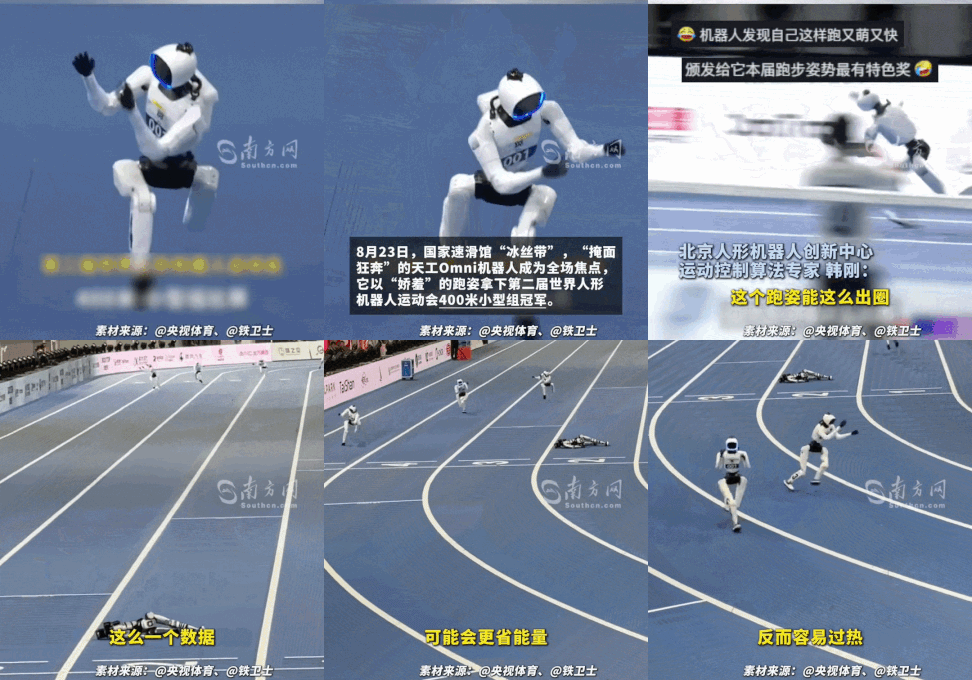
The winning robot has also become internet’s favorite meme with its funny running posture: a Tien Kung Omni won the small-group 400m while running with its hands held up next to its face. The developers confirmed the gait was not designed — it emerged during reinforcement learning. While the engineers input a normal human running posture, the robot somehow figured out that fast arm-swinging overheats its shoulder joints and that it’s more efficient to run in this funny manner.
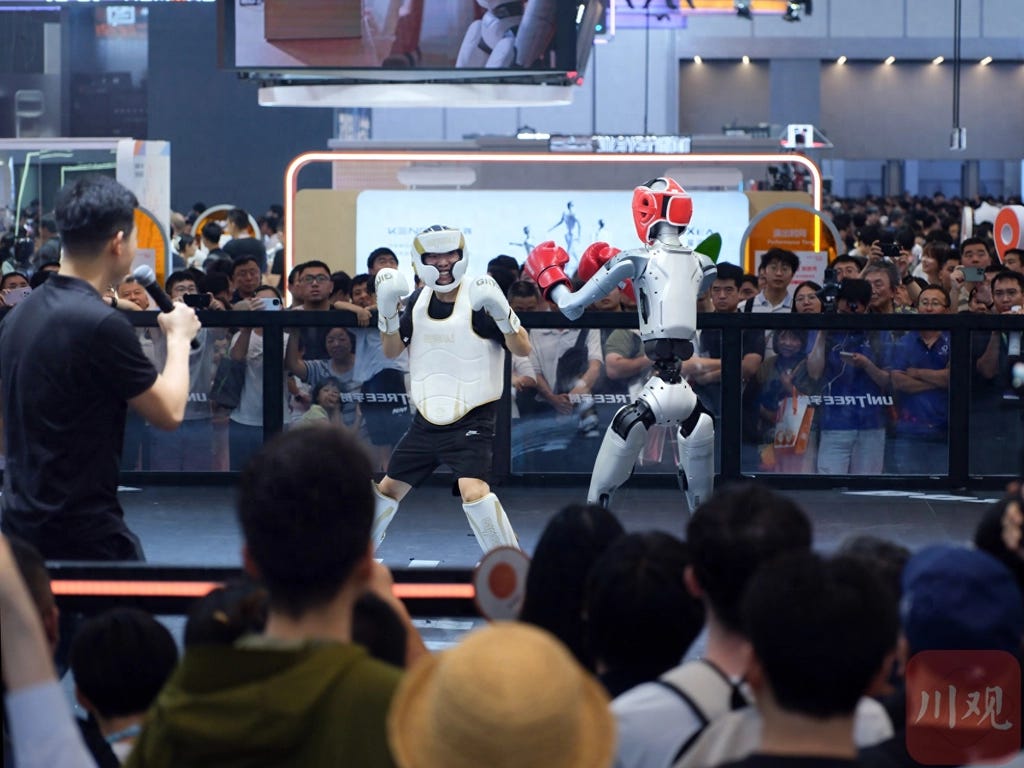
At the Unitree booth, G1 and H2 demonstrated new combat routines — combination punches, dodges, kicks — with clearly more force and continuity than last year, and one robot sparred a professional human boxer in real time. Running speed, stability, and dynamic balance have all taken a visible step up.
2. But the commercial landing seems less new than headlines suggest
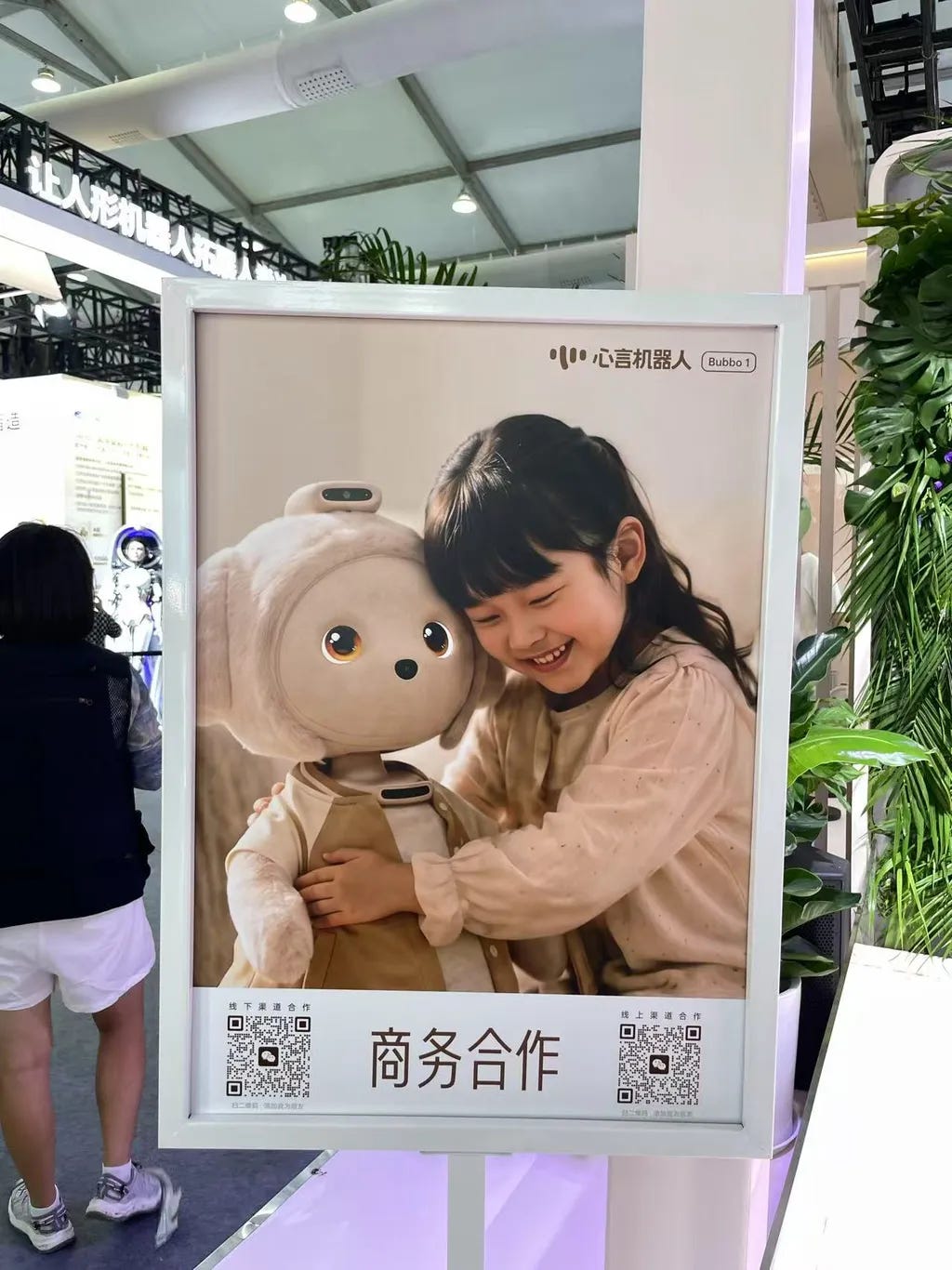
Beyond the demos, the scenarios with real commercial traction were largely the same categories as last year: retail food service (coffee, juice, pancakes), sorting, robot dogs, companion robots — almost none of them humanoid.
Tea and coffee automation is genuinely landing in China: Chagee's intelligent tea machine produces a cup in 8 seconds with 0.2% flavor error; Nayuki's auto milk-tea machines are in all its stores, lifting capacity ~40%; and Cotti's tea brand Cha Mao runs dual-robotic-arm collaboration stores. Despite not being related to humanoid robots, these automation solutions still tagged along with the spotlight at the conference and, based on my observations, attracted many commercial leads, including buyers from foreign countries.
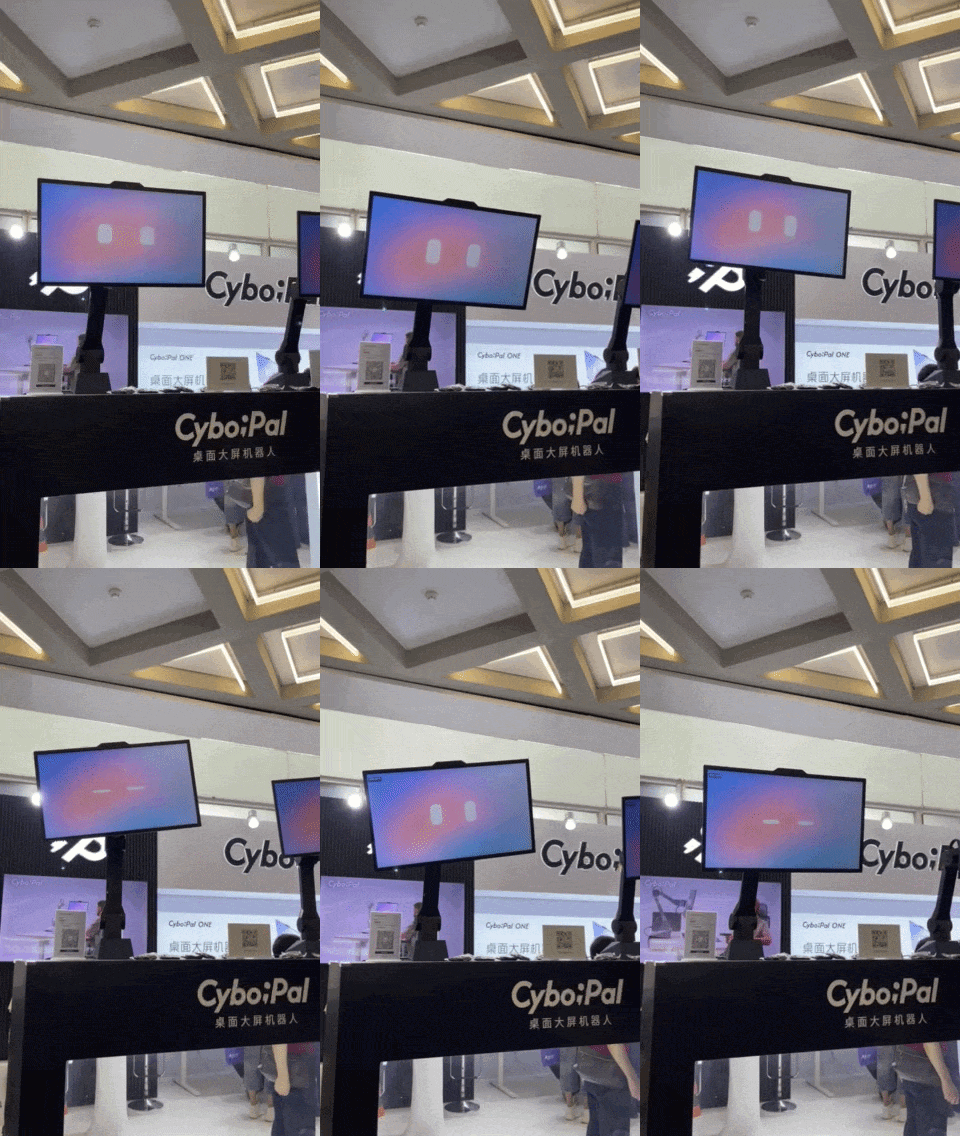
Meanwhile, industrial arms and wheeled robots — the less ‘fancy’ systems — remain where actual deployment happens. This isn’t particularly disruptive innovation, given that China’s industrial automation has been expanding for a decade.
Some promising new commercial applications are starting to emerge for quadruped robots, which are being deployed in industrial sectors like construction, mining, and security (such as hazardous response, inspection, and search etc).
Dexterous-hand demos (folding clothes, supermarket sorting) are still too slow to imagine rolling out at scale in the Chinese labor market.
3. A new layer of companies addressing the data bottleneck
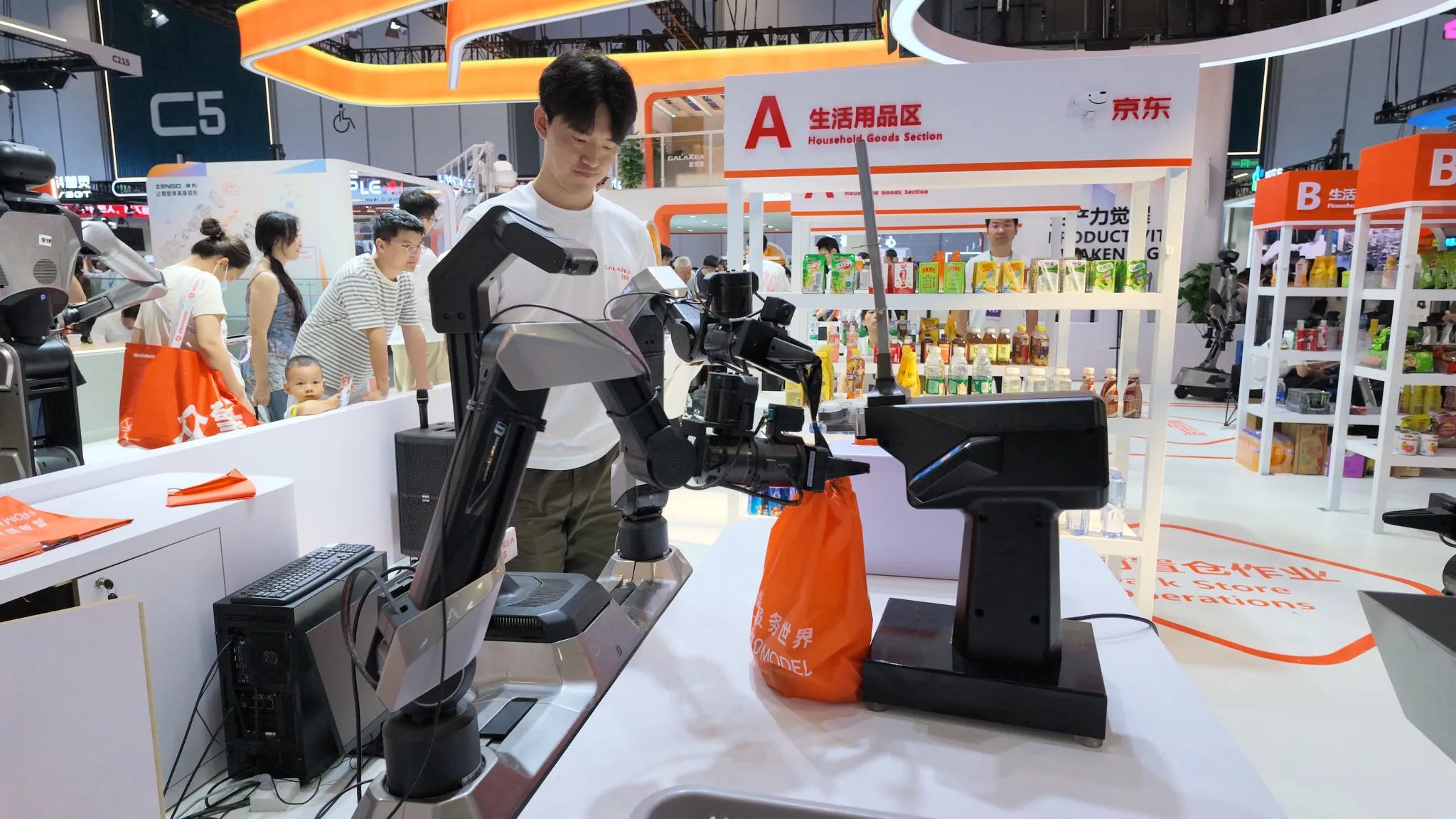
Another viable business model emerging is from companies that don’t build robots at all — they collect, curate, and sell training data alongside training software. As I wrote in my earlier piece on China’s robotics startups, the bottleneck for embodied AI is high-quality real-world interaction data. This year, that thesis was clearly visible on the exhibition floor, with several startups specifically targeting real-machine data collection, data governance, model training, and simulation evaluation.
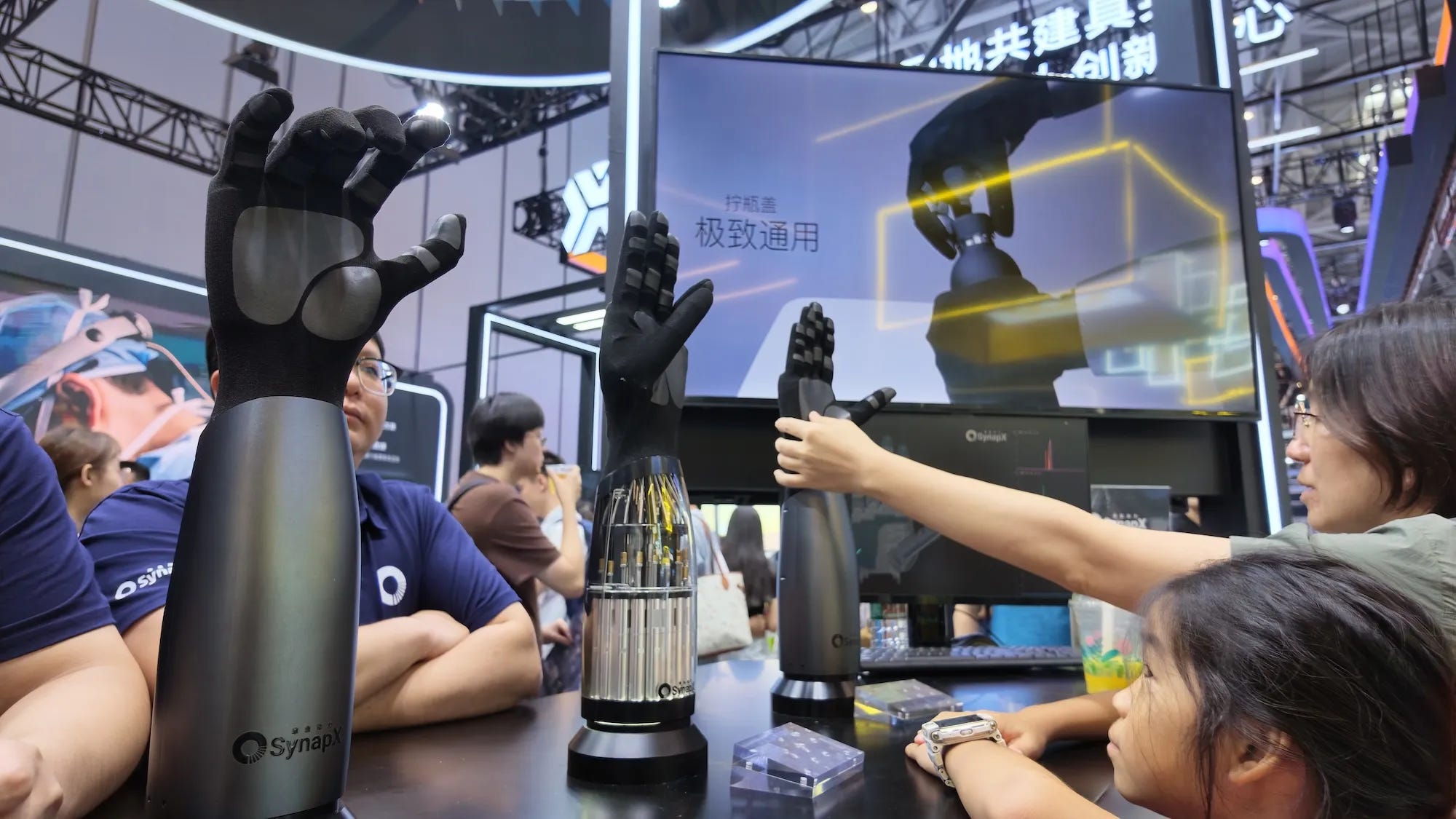
A national standard for tactile data collection — the “last millimeter” of embodied intelligence — was also initiated at the conference. It’s not as sexy an idea as a general humanoid for your house, but it’s a real business model and a bottleneck today.
4. A very “China-specific” scenario: TCM pulse-diagnosis robots
The longest queue I saw at the conference wasn’t just for the boxing ring — it was for the Traditional Chinese Medicine pulse-diagnosis robots.
An AI TCM screening terminal runs face, tongue, and pulse diagnostics plus a questionnaire in 3–5 minutes and produces a health report. The machine has been deployed in primary care clinics, wellness centers, and nursing homes since mid-2025.
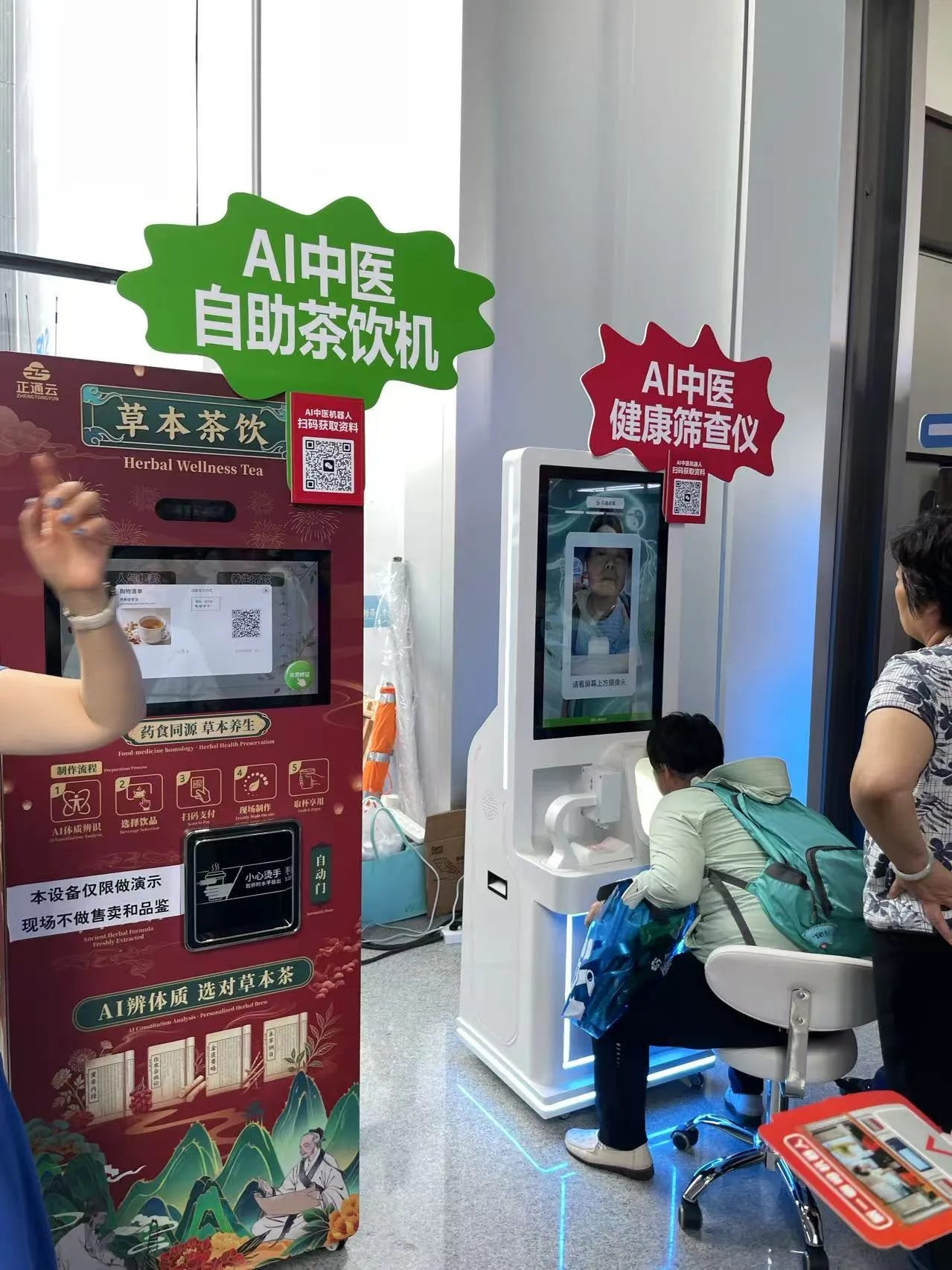
I tried a similar device at a shopping mall in Beijing myself — the diagnosis quality was genuinely impressive. The machine serves as a customer-acquisition tool, and monetization comes from customized wellness services attached to the diagnosis, such as herbal teas, supplements, follow-up consultations. Given the cultural trust in TCM and China’s booming wellness spending, I do think this is a model that can spread quickly in China.
5. Exoskeletons: a credible near-term landing point
Again not humanoid — but possibly the closest thing to a real consumer robot market in China right now. What caught my attention is that mature consumer brands and home appliance giants are entering this market: Haier showed three generations of AI sports exoskeletons (flagship W3: ~2kg, ¥15,999) and reportedly sells nearly 1,000 units a month through 16 offline stores; outdoor-apparel brand Toread sells the ¥7,699 Crest C3; CETC’s 21st Research Institute and medical specialists like ChengTian Technology also exhibited, showcasing systems trained and optimized on real-world clinical and rehabilitation data.
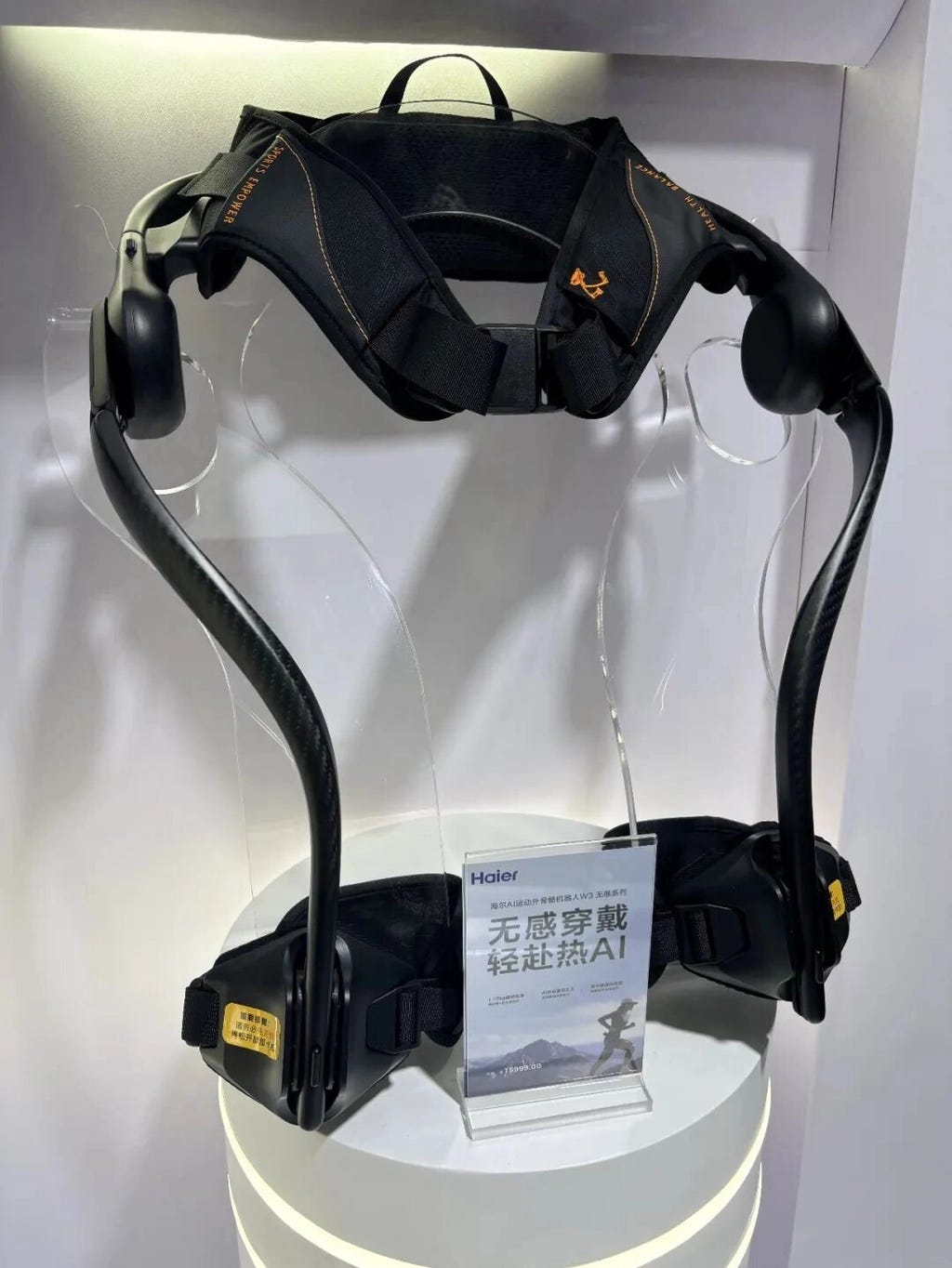
The demand side backs this up: our online sales data at BigOne Lab shows that exoskeleton sales have started to ramp up since 2025. Consumer-grade exoskeletons are promising for an aging society, with China already counting roughly 300 million people over 60. Hip-assist exoskeletons are becoming not just a nice-to-have, but a necessity for many.

The same hardware extends to rehabilitation: companies like Fourier (which we visited on the Baiguan tour this April) target sub-¥100k rehab exoskeletons, which could make rehab treatment affordable at community-clinic scale.
Want to go deeper? Join the Beijing Robotics Tour this October
China shipped over 40,000 humanoid robots in H1 2026 — 97% of the global total, per the industry report released at the conference. While that share reflects manufacturing scale, what does the overall technology leadership or commercialization scenario really look like?
Based on my observations at the conference, while technology is advancing, business models are still taking shape — especially for humanoid robots. The real money is still coming from automation equipment, training data, and non-humanoid consumer robots.
If you’d like to look behind the exhibition floor, our Beijing Robotics & AI Executive Tour (October 19–23, 2026) does exactly that: closed-door sessions with C-level and senior management teams at embodied-intelligence companies like Galbot, Linkerbot, and Noetix Robotics, visits to the Beijing Humanoid Robot Innovation Center and the Yizhuang L4 robotaxi zone, plus sessions with Moonshot AI and Zhipu AI.
To ensure the best experience, space is limited to 20 seats. Early-bird pricing ends September 13. RSVP and full details here:

You can also check out the Q&A of regularly asked questions. Please feel free to contact us at Baiguan_ChinaTour@bigonelab.com with any questions.


